
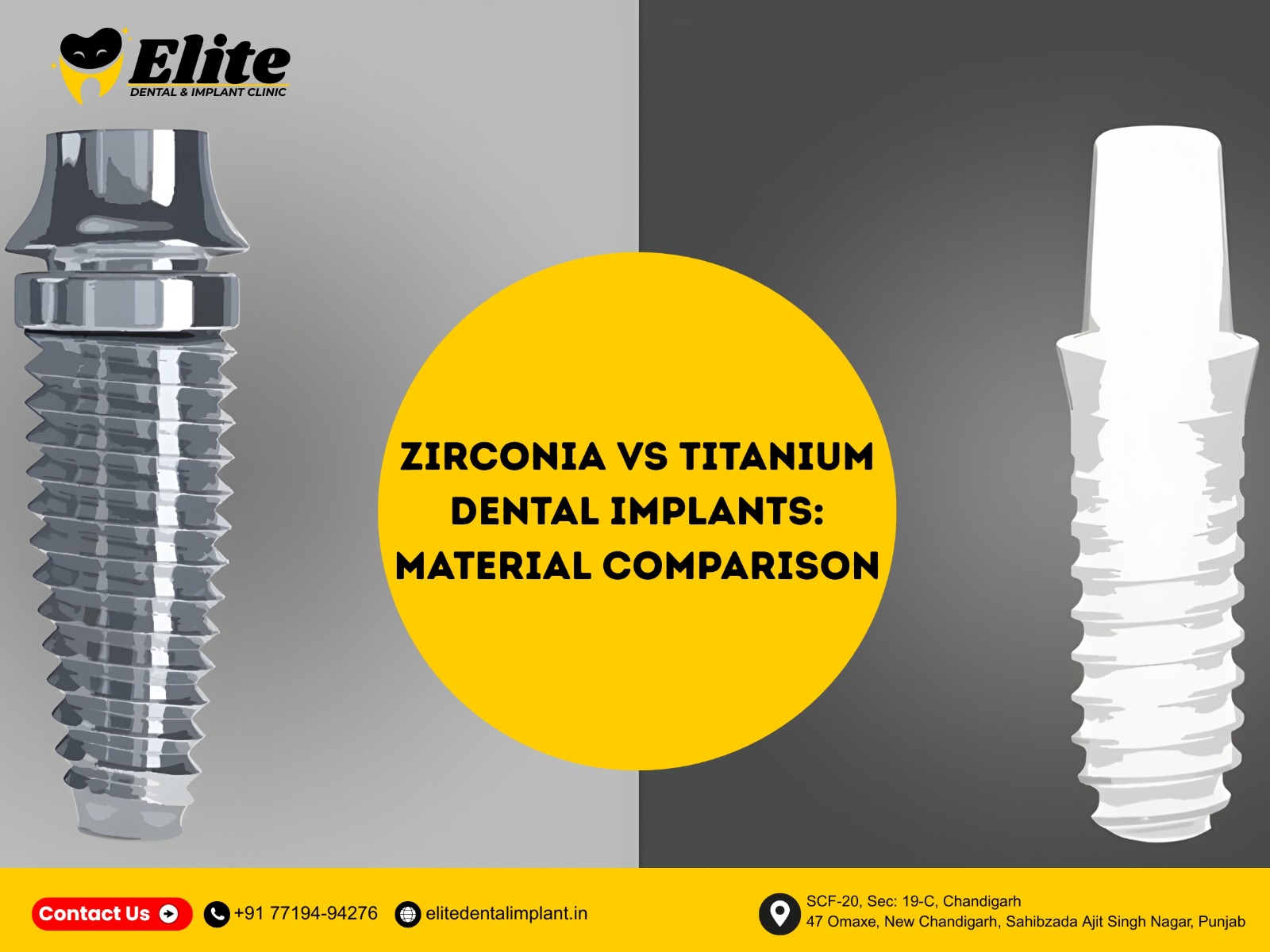
Zirconia vs. Titanium Dental Implants: Material Comparison
Introduction
When considering dental implants, two of the most common materials used for the implant posts are Titanium (the long-standing standard) and Zirconia (a newer, ceramic alternative). Both materials allow implants to replace missing teeth effectively — but they differ in properties, aesthetics, and suitability. Choosing between them is important because the implant material affects how the implant integrates with your jawbone, how natural the restoration looks, and how well it performs over many years.
Whether you want strength and durability for heavy chewing or a metal-free, aesthetically pleasing solution for visible teeth, understanding how implant materials fit into the broader range of dental implant options can help you make a more confident, long-term decision.
Overview of Dental Implant Materials (Ceramic vs. Metal)
Titanium Implants
• Titanium implants are made from a biocompatible metal and are among the most widely used dental implant materials worldwide. This means that the body generally accepts them well, and they integrate reliably with bone and gum tissues.
• Because titanium is strong yet lightweight, it’s well-suited for various dental situations — from single teeth to full arches.
Zirconia Implants
• Zirconia implants are made from a high-strength ceramic material — often dubbed “ceramic steel” because of their strength and durability compared to many other ceramics.
• Being ceramic (metal-free), zirconia implants offer an alternative for patients seeking a metal-free solution for their dental restoration.
In simpler terms, titanium represents the metal side of the equation, while zirconia offers a ceramic / metal-free alternative. Each has different strengths, and the “right” material depends on your priorities and individual circumstances.
Advantages and Drawbacks of Titanium Implants
Advantages
• Proven success and long clinical history: Titanium implants have been used for decades and are considered the gold standard. Their long-term performance and reliability are well documented.
• Strength & durability: Titanium offers excellent mechanical strength and resistance to fracture or wear — making it ideal for all regions of the mouth, including molars where chewing forces are high.
• Excellent osseointegration: Titanium integrates reliably with bone, forming a stable, long-lasting bond that supports crowns, bridges or full dentures.
• Cost-effectiveness and versatility: Because titanium implants are widely used and manufactured at scale, they tend to be more affordable, and there are many designs and options — from single-tooth implants to full-arch solutions.
Drawbacks
• Aesthetic limitations: Titanium has a metallic (grayish) color. In patients with thin gum tissue or in areas where gums may recede, the metal may show through as a dark shadow under the gumline — which can be cosmetically undesirable, especially for front teeth.
• Potential sensitivity or allergy (rare): Though uncommon, some individuals may have metal sensitivities or prefer non-metal solutions — prompting them to explore alternatives.
• Metal presence: For patients seeking a metal-free mouth — whether for personal preference or holistic reasons — titanium implants may be less appealing.
Advantages and Drawbacks of Zirconia (Ceramic) Implants
Advantages
• Superior aesthetics: Because zirconia is white/ceramic, it blends more naturally with natural teeth — making it ideal if the implant is in the esthetic zone (front teeth or visible areas) or if you have delicate/ thin gums and want to avoid grey-ish shadows.
• Hypoallergenic / Metal-free & Biocompatible: Zirconia implants are metal-free, so they are a good option for people with metal sensitivities. Their tissue response tends to be favorable, comparable to titanium.
• Soft tissue friendliness & lower plaque affinity: Some studies suggest zirconia may attract less plaque and support healthier gum tissue compared to metal, which can help reduce inflammation risk around implants.
• Metal-free alternative for holistic / aesthetic preferences: For patients who value a metal-free dental restoration (for aesthetic or health reasons), zirconia provides a compelling option.
Drawbacks
• Brittleness and less flexibility under heavy load: While zirconia is strong, ceramics tend to be more rigid and less forgiving than metal. Under high chewing stress (e.g., molars, heavy bite), zirconia implants can be more susceptible to fractures or micro-cracks, especially in older or one-piece designs.
• Less extensive long-term data: Compared to titanium implants (with decades of use), zirconia implants are relatively newer; thus, long-term, large-scale clinical data — especially for complex cases or full-mouth restorations — remain limited.
• Higher cost & limited options: Zirconia implants are often more expensive than titanium and may come in fewer design varieties (e.g., angled abutments or multi-piece options are more limited) — which may constrain certain complex restorations.
• Design limitations (especially in one-piece implants): Earlier zirconia implants were often one-piece — meaning the implant and abutment are fused — limiting flexibility in adjusting angle or position compared to two-piece titanium systems. This may pose challenges in some cases.
How to Choose the Best Material for Your Needs
Choosing between titanium and zirconia implants should be a personalized decision made in consultation with a qualified implant specialist. Here are the main factors to consider:
• Aesthetic priorities — If the implant will support a tooth in a highly visible area (front teeth) or your gums are thin/translucent, zirconia may deliver the most natural-looking result.
• Metal sensitivities / desire for metal-free restorations — If you have a known allergy, sensitivity, or prefer to avoid metals entirely, zirconia is a suitable alternative.
• Functional demands and bite forces — For molars or areas with heavy chewing load, titanium often remains the safer choice because of its superior strength and flexibility.
• Cost & budget considerations — Titanium implants tend to be more cost-effective; zirconia implants often carry a premium price.
• Long-term reliability & clinical track record — Titanium has decades of proven success and extensive clinical data, making it a highly predictable choice for many situations.
• Bone quality & surgical complexity — In complex cases (multiple implants, full-arch restorations, grafting), titanium’s versatility and design options may allow more customized solutions.
Final advice: There’s no one-size-fits-all “best” material. The ideal choice depends on your oral anatomy, restorative needs, aesthetic expectations, and personal preferences. A thorough evaluation — including bone and gum health, bite dynamics, and lifestyle — by an experienced implant specialist will help determine whether titanium or zirconia implants are better for you.
Conclusion
Both titanium and zirconia implants offer strong, biocompatible options for replacing missing teeth — but they serve somewhat different needs. Titanium remains the tried-and-true standard, especially for demanding situations requiring strength, versatility, and long-term durability. Zirconia, on the other hand, gives a metal-free, highly aesthetic alternative, especially attractive for visible teeth or patients with metal sensitivities.
If you are considering implants — whether in Chandigarh or elsewhere — discussing both materials with a qualified professional as part of your overall dental implant treatment will help you make an informed, personalised decision. With the right choice, you can enjoy a stable, natural-looking smile for many years to come.
