
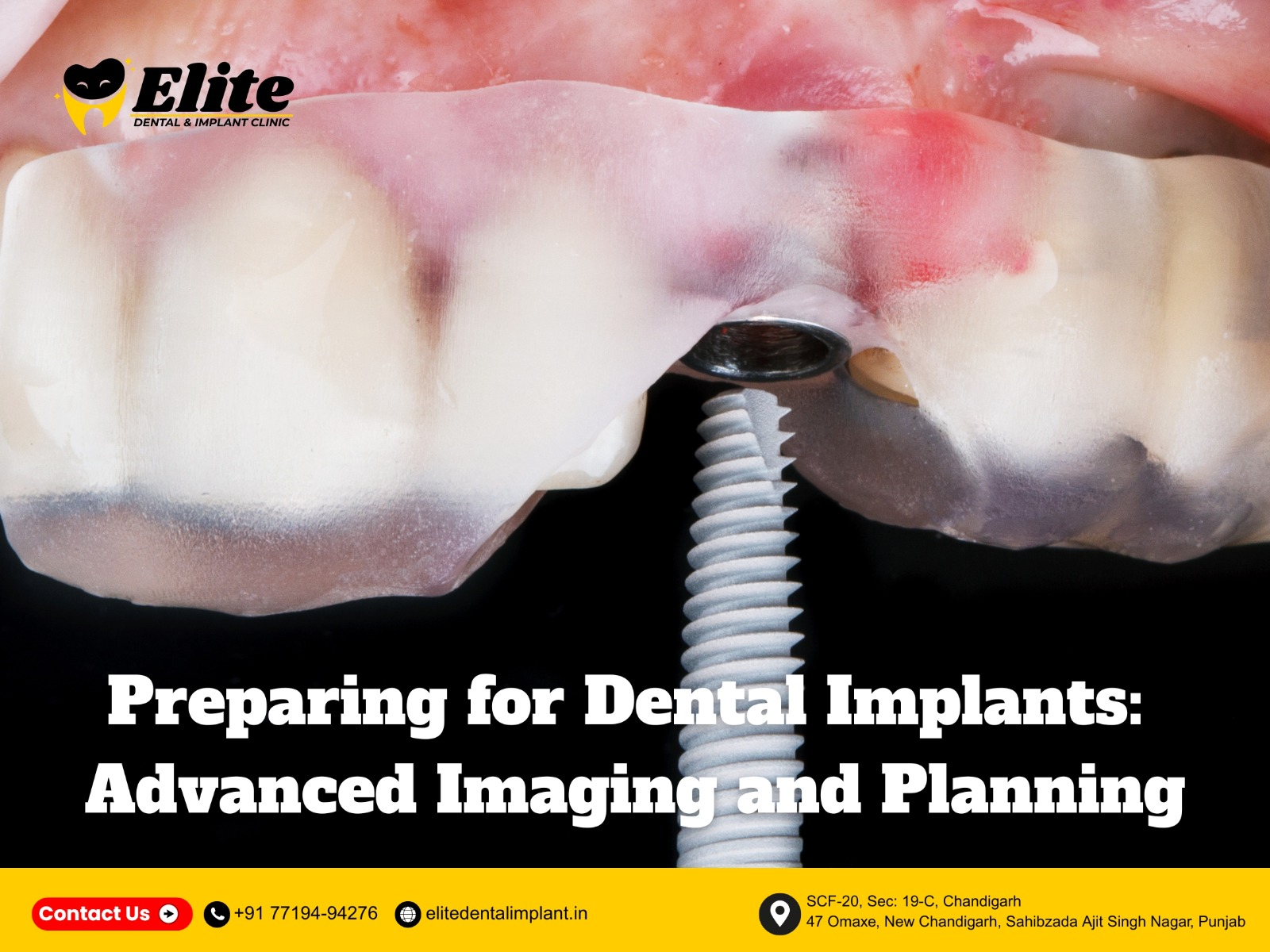
Preparing for Dental Implants: Advanced Imaging and Planning
Introduction
Successful dental implant surgery doesn’t begin on the day of the operation — it begins much earlier. The secret to predictable, safe, and long-lasting results lies in meticulous dental implant planning and advanced diagnostics. Thanks to modern technology, what once relied heavily on a dentist’s experience and educated guesses can now be guided by precise 3D data, virtually eliminating uncertainty.
A central tool in this transformation is CBCT, which allows implant surgeons to plan with a level of accuracy that ensures better outcomes and greater safety. Because this planning directly influences how implants are placed and how recovery progresses, understanding the dental implant procedure and healing process is an essential part of preparing for treatment.
The Role of CBCT Scans in Implant Dentistry
What is CBCT?
CBCT — Cone Beam Computed Tomography — is a specialised type of dental imaging that uses a cone-shaped X-ray beam to produce a high-resolution, 3D view of the jaw, teeth, nerves, sinuses, and surrounding structures. Unlike traditional two-dimensional X-rays, CBCT gives a full volumetric picture — enabling comprehensive analysis of bone and soft tissue.
Because of this 3D capability, CBCT has become a gold standard for pre-surgical implant planning, offering detailed insight into every anatomical dimension.
What Critical Data Does CBCT Provide?
When you undergo a CBCT scan before implants, the scan yields essential data points that guide the entire treatment plan and surgical approach:
• Bone Density and Volume — CBCT allows precise measurement of the amount, width, height, and density of the jawbone available for implant placement. This helps determine whether bone grafting or sinus lift is needed or if the existing bone is sufficient.
• Nerve and Sinus Mapping — The scan clearly shows vital anatomical structures such as the mandibular nerve canal in the lower jaw and the sinus cavities in the upper jaw. This is critical to avoid nerve damage or sinus perforation during surgery.
• Angulation Planning — With detailed bone maps, the surgeon can determine the ideal angle, depth, and orientation of the implant for optimal support and load distribution. This maximizes stability and long-term success.
In short, CBCT transforms implant planning from guesswork to data-driven precision — significantly reducing risks, complications, and surprises during surgery.
Digital Impressions and 3D Treatment Planning
Digital Impressions
Another modern advancement is the use of intraoral scanners to capture digital impressions of your existing teeth and gums — replacing traditional, messy dental molds. These scanners record the shape, contours, and gum/soft tissue anatomy with high precision.
This data becomes part of a comprehensive 3D model that includes both bone structure (from CBCT) and soft tissue/teeth anatomy (from the intraoral scan) — giving a full representation of your oral situation.
Virtual Planning
Once CBCT data (bone) and digital impressions (teeth & gums) are obtained, they are fused in specialized virtual implant-planning software. Through this virtual environment, the surgeon can:
• Simulate the ideal implant position (depth, angle, diameter) based on bone and soft tissue anatomy.
• Select the most suitable implant size and design for your jaw and future prosthesis.
• Plan the final prosthetic restoration (crown, bridge, denture) simultaneously, ensuring that implant placement supports optimal function and aesthetics.
This “prosthetically driven” planning ensures that the implant will not just fit the bone — it will also support a natural-looking, functional final tooth or set of teeth.
A fully digital workflow significantly enhances predictability and reduces the margin of error compared to older analog methods.
Ensuring Precision with Virtual Implant Planning
Surgical Guides: Turning the Virtual Plan into Reality
One of the most powerful outcomes of virtual planning is the creation of a 3D-printed surgical guide (also known as a surgical stencil or template). This guide is custom-made based on your 3D model and designed to fit exactly onto your existing teeth or jaw.
During surgery:
• The guide is positioned over your teeth or gums.
• It directs the drill and implant insertion to the exact angle, depth, and position that was predetermined virtually.
• This eliminates most of the guesswork and reduces variability, even for complex cases.
What Are the Benefits for You, the Patient?
Because of this high level of precision and planning, patients enjoy multiple advantages:
• Safer Surgery — Risk of nerve damage, sinus perforation, or improper implant placement is greatly reduced.
• Less Invasive & More Comfortable — With accurate planning and guides, surgical time may be shorter, and bone manipulation minimized — resulting in less trauma and quicker recovery.
• Predictable Results — Because implant placement, prosthesis design, and final restoration are all planned together, the likelihood of success, good aesthetics, and functional stability increases substantially.
• Efficiency & Convenience — The digital workflow often reduces the number of visits, avoids repeated impressions, and streamlines the treatment process from planning to final restoration.
Why Pre-Operative Planning Matters as Much As Surgery
Because modern implant dentistry is built on data, not guesswork, the pre-operative phase — driven by CBCT imaging, digital impressions, virtual planning, and surgical guides — is arguably as critical as the surgical phase itself.
This rigorous planning:
• Minimizes risks.
• Maximizes precision.
• Ensures implants are placed in the best possible position to support function and aesthetics.
• Allows the restoration (crown/bridge/denture) to be precisely matched to your mouth’s unique anatomy, resulting in a natural, comfortable, long-lasting outcome.
When an implant surgeon treats planning as seriously as surgery, patients benefit through higher success rates, fewer complications, and greater long-term satisfaction.
Conclusion
If you’re considering dental implants — whether a single tooth or a full-arch restoration — it’s essential to understand that the “invisible work” before surgery is what makes the visible outcome successful. Advanced imaging and digital planning transform implant dentistry into a highly precise, predictable, and patient-friendly treatment.
As an implant surgeon, I believe that this high-tech preparation — including CBCT scans, digital impressions, virtual planning, and custom surgical guides — is the foundation of safe, effective, and durable dental implants. For patients, that means not just fewer surprises, but a smile that lasts.
