
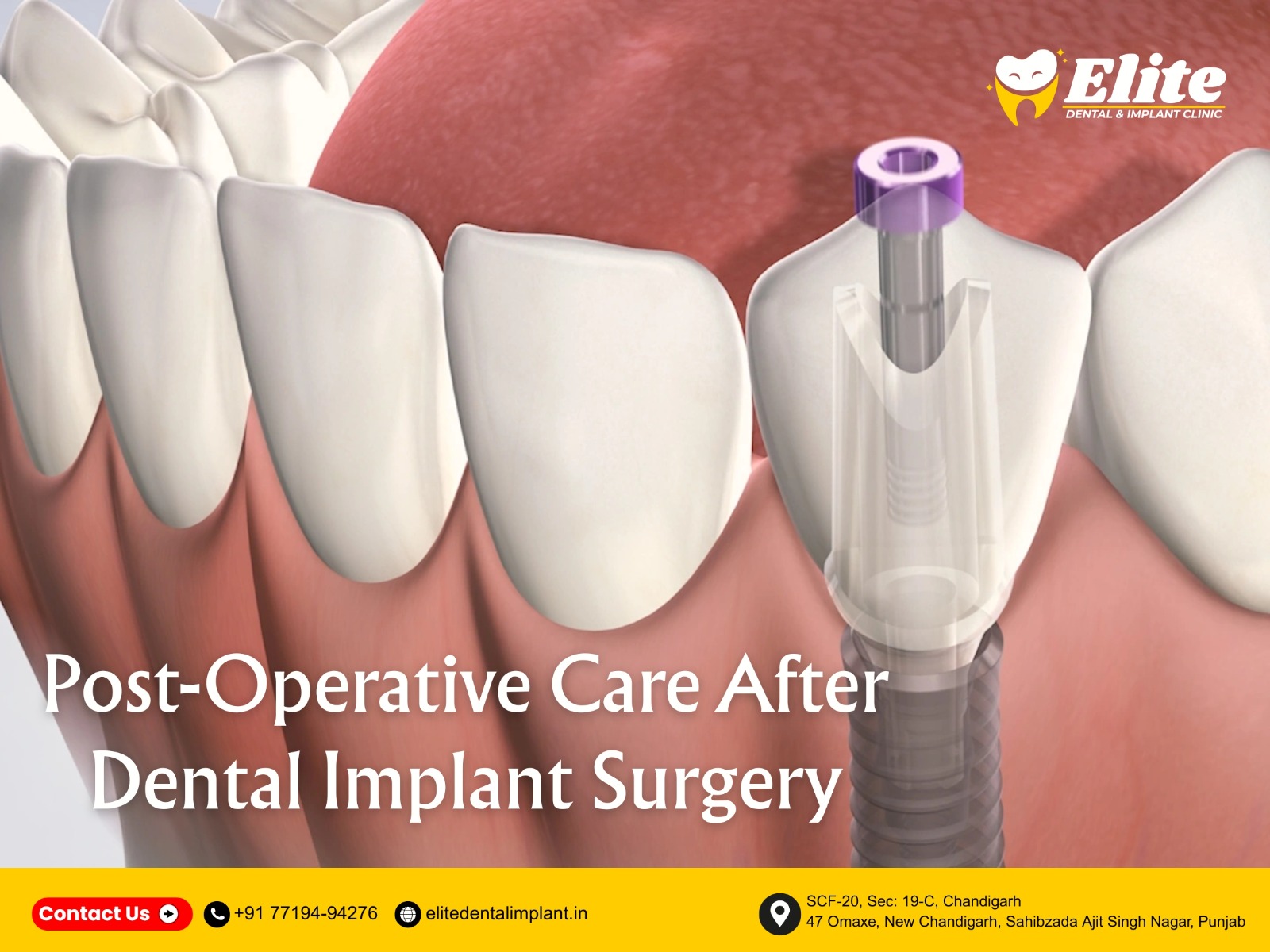
Post-Operative Care After Dental Implant Surgery
Introduction
Congratulations on completing your dental implant surgery. 🎉 The most critical phase now begins: the healing process, which determines the long-term success of your implant. Following these post-operative instructions carefully is non-negotiable — doing so ensures optimal healing, reduces risk of complications, and helps your new implant integrate smoothly with your jawbone. Proper aftercare is a crucial part of the dental implant procedure and healing process, helping ensure long-term stability and success.
Immediate Post-Surgery Instructions (Bleeding, Swelling)
Bleeding Control
• In the recovery room, you’ll likely have a gauze pad placed over the surgical site. Keep it in place with a firm but gentle bite pressure for about 30–45 minutes.
• Once you get home, if bleeding persists, replace the gauze with a fresh piece and apply firm pressure for another 30–45 minutes. Avoid frequent replacement if there’s only light oozing, as that may disturb clot formation.
• Avoid spitting, rinsing vigorously, or using a straw for the first 24 hours. These actions may dislodge the blood clot and impair healing.
Swelling Management
• Swelling is normal, and often peaks around 48 hours post-surgery.
• To manage swelling, apply ice packs (wrapped in a cloth) to the area outside your cheek for 20 minutes ON / 20 minutes OFF during the first 24–36 hours.
• Keep your head elevated (use 2–3 pillows) while resting or sleeping for at least the first night or two — this helps reduce swelling and throbbing.
Rest & Activity
• Plan to rest for the remainder of the surgery day. Avoid strenuous activity, heavy lifting, or bending over.
• Keep your head elevated and avoid lying flat if possible.
Managing Discomfort and Medications
Pain Management
• As the local anesthesia wears off, you may begin to feel discomfort. It’s best to take prescribed or recommended pain medication at the first sign of discomfort — don’t wait for pain to spike. Many surgeons advise taking painkillers even before numbness completely subsides.
• Use pain relievers exactly as directed. If using narcotic pain medications, avoid driving or operating heavy machinery.
Antibiotics
• If your dentist prescribed antibiotics, take the full course — even if you feel fine early. This helps prevent infection, which can compromise the implant.
Nausea or Discomfort from Medication
• Some pain meds can cause mild nausea. If it happens, try small sips of clear fluids, plain toast, or dry crackers. Ensure you stay hydrated and avoid heavy or greasy foods until you feel better. Many patients stabilize by eating light, easily digestible foods.
Diet and Oral Hygiene Tips During Healing
Diet Recommendations
First 24–48 hours:
• Stick to cool or lukewarm, soft or liquid foods only — e.g. yogurt, soup, smoothies, pudding. Hot foods/beverages should be avoided.
• Avoid using straws — suction can disturb the healing clot.
First week:
• Gradually move to soft, easy-to-chew foods such as scrambled eggs, mashed potatoes, soft pasta, cottage cheese, mild soup, soft-cooked veggies, smoothies.
• Avoid hard, crunchy, sticky, or sharp foods (chips, nuts, popcorn, seeds) which may irritate or injure the surgical site.
• No smoking or alcohol for at least first 1–2 weeks (or as your surgeon recommends) — these can significantly hinder healing and increase risk of complications.
Oral Hygiene Guidelines
• Do not rinse, spit, brush or floss near the surgical site for the rest of the surgery day. This helps preserve the blood clot.
• After 24 hours, begin gentle warm salt-water rinses (½ teaspoon salt in a glass of clean warm water) — gently swish and let water fall out (don’t spit forcefully). Repeat after meals.
• Resume gentle brushing of teeth not adjacent to the surgical site with a soft-bristle brush. Avoid vigorous strokes near implants.
• Once the gums start healing (as advised by your surgeon), you may gradually reintroduce normal brushing and flossing — but always be gentle around the implant area.
When to Schedule Follow-Up Visits
• A typical first post-op check is scheduled around 7–14 days after surgery to assess healing and possibly remove sutures if present.
• Long-term monitoring will continue over the next several months to evaluate osseointegration (fusion of bone to implant), gum health, and readiness for final restoration.
Red Flags — When to Contact the Clinic Immediately
Call your dental/surgical office right away if you experience:
• Excessive or uncontrolled bleeding that doesn’t improve with pressure after 1–2 hours
• Severe pain not relieved by prescribed medication or increasing pain after initial improvement
• Swelling that worsens after 72 hours or continues beyond a few days, or sudden, unusual swelling or bruising
• Fever > 101°F (≈ 38.3 °C), chills, pus, bad taste or odor, or pus/discharge from the surgical site — signs of possible infection.
• Loose implant or unusual movement at the implant site after healing begins — should always be evaluated promptly.
Summary: Step-by-Step Healing Timeline
Days 0–2 (First 48 hours):
• Rest, head elevated, use ice packs.
• Manage bleeding with gauze & pressure; no rinsing/spitting.
• Soft or liquid diet; no straws, smoking, alcohol.
Days 2–7:
• Begin gentle salt-water rinses, gentle brushing (avoid surgical area).
• Continue soft diet; gradually introduce soft foods.
• Take antibiotics/medication as prescribed.
Week 2:
• Return for follow-up, suture removal (if needed), healing assessment.
• Gradually resume more normal diet (as advised), but still avoid hard/crunchy foods near implant area.
Months 1–3 (Healing & Osseointegration Period):
• Attend scheduled follow-ups to monitor integration.
• Maintain good oral hygiene and soft-to-normal diet transition.
Long-term:
• Treat the implant like a natural tooth — regular cleaning, check-ups, avoid smoking — to support lifelong success.
Final Thoughts
Your cooperation during the post-operative period — especially in the first few days — is as important as the surgery itself. Following these instructions carefully helps ensure your implant heals properly, integrates fully, and becomes a stable, long-lasting part of your smile.
Long-term success also depends on proper follow-ups and professional guidance as part of your overall dental implant treatment. Should anything feel off or uncomfortable beyond what’s described here, don’t hesitate to call your dental team. Early intervention can prevent small issues from becoming serious complications.
Rest well, follow the care plan, and look forward to a healthy, functional implant that serves you for many years to come. 🦷
