
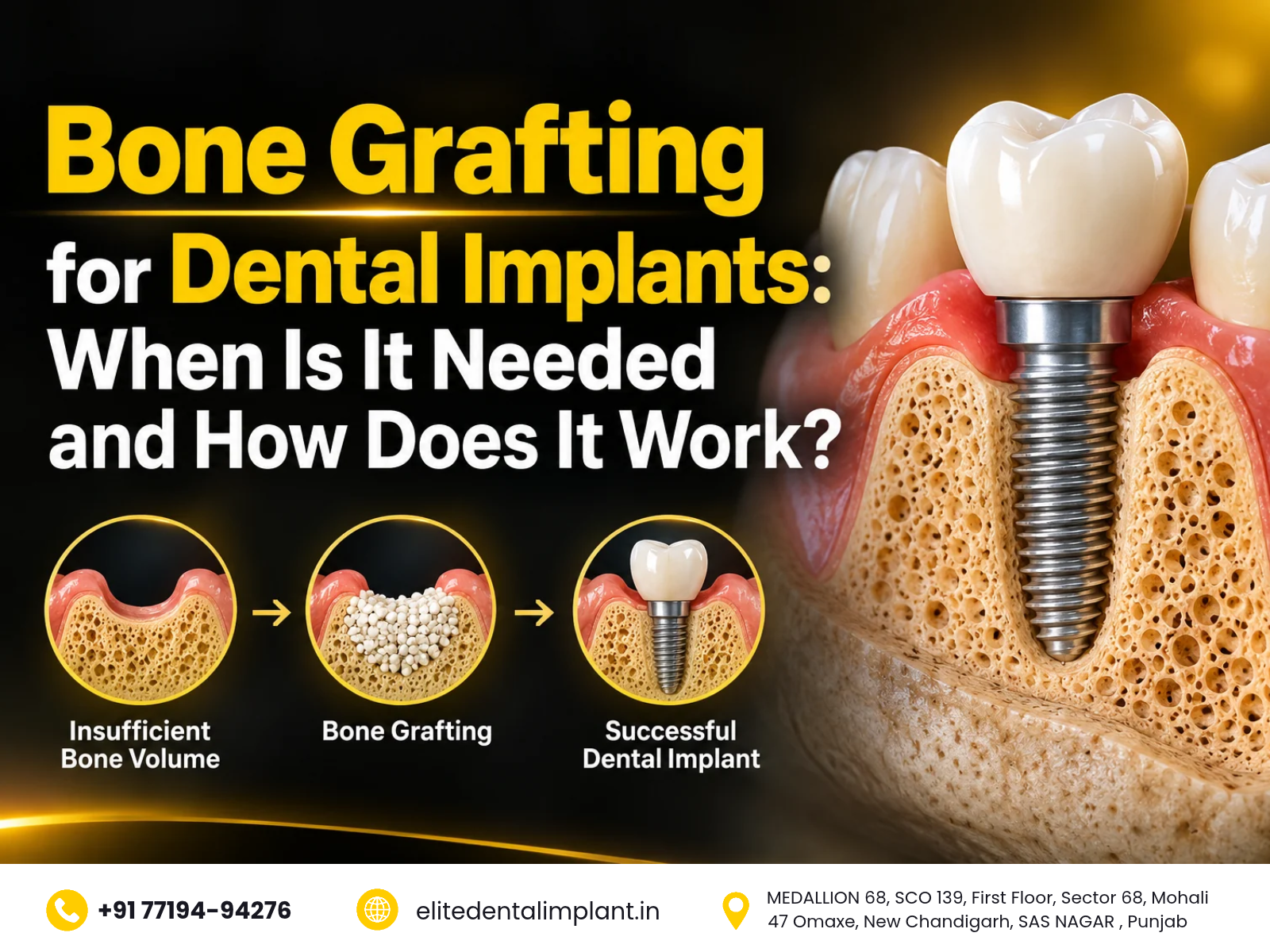
Bone Grafting for Dental Implants: When Is It Needed and How Does It Work?
Bone grafting for dental implants is needed when a patient does not have sufficient jawbone height, width or volume to support an implant securely. The procedure involves adding bone graft material to the deficient area to help restore or increase the available bone. Over time, the graft heals and integrates with the surrounding bone, creating a more suitable foundation for dental implant placement.
However, not every patient with bone loss requires bone grafting. The need for this procedure depends on the patient’s jawbone condition, the location of the missing tooth, and the implant treatment plan.
If you have been told that you do not have enough bone for dental implants, understanding bone grafting can help you make a more informed decision about your treatment options.
What Is Bone Grafting in Dental Implant Treatment?
Bone grafting is a dental surgical procedure used to rebuild or increase the amount of bone in an area where bone has been lost or is insufficient.
When a tooth is missing for a long time, the jawbone in that area may gradually shrink because it no longer receives stimulation from the natural tooth root.
This reduction in bone volume can make dental implant placement challenging.
A bone graft helps address this problem by placing suitable graft material in the area where additional bone support is needed.
The graft material acts as a framework that supports the formation of new bone as the healing process progresses.
The main purpose of bone grafting is to create adequate bone support for dental implant placement when the existing jawbone is insufficient.
Why Does Jawbone Loss Occur After Losing a Tooth?
Many people assume that losing a tooth only creates a gap in their smile. However, tooth loss can also affect the underlying jawbone.
The natural tooth root stimulates the surrounding bone during everyday activities such as chewing. When the tooth is removed or lost, this stimulation reduces, and the surrounding bone may gradually begin to shrink.
Common causes of jawbone loss include:
- Missing teeth: Bone in the area of a missing tooth may gradually reduce in volume over time.
- Advanced gum disease: Periodontitis can damage the tissues and bone supporting natural teeth.
- Tooth extraction: Bone changes can occur after extraction as the socket heals.
- Dental infections: Certain untreated infections can damage the surrounding jawbone.
- Long-term denture use: Changes in the underlying jawbone can occur over time in areas supporting removable dentures.
- Dental trauma: Injuries affecting the teeth and surrounding structures may result in bone damage.
The extent of bone loss varies from person to person. Some patients may have sufficient bone for implant placement even after several years, while others may require additional treatment.
When Is Bone Grafting Needed Before Dental Implants?
Bone grafting may be recommended when the available jawbone cannot provide adequate support for the planned dental implant.
Here are some common situations where a dentist may consider this procedure.
1. When the Jawbone Has Become Too Thin
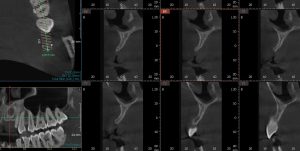
If the jawbone does not have sufficient width, placing an implant in the planned position may be difficult.
Bone grafting may help increase the width of the deficient area and create better conditions for implant placement.
2. When There Is Insufficient Bone Height
In certain cases, the jawbone may not have enough vertical height to accommodate an implant safely.
This is particularly important in the upper back jaw, where the maxillary sinus is located above the teeth.
A sinus lift procedure may be considered when additional bone height is required in this region.
3. When a Tooth Has Been Missing for Several Years
Long-standing tooth loss can lead to gradual changes in the jawbone.
If the bone has reduced significantly, the dentist may recommend bone augmentation before placing an implant.
However, the duration for which a tooth has been missing does not automatically determine whether grafting is necessary. A proper examination is required.
4. After Tooth Extraction
Following tooth extraction, the surrounding bone undergoes natural healing and remodelling.
In selected cases, a procedure called socket preservation may be performed at the time of extraction to help reduce the loss of bone volume.
This may help maintain the site for future implant treatment.
5. When Previous Infection Has Damaged the Bone
Severe dental infections or advanced gum disease can damage the bone surrounding teeth.
Before considering bone grafting, the dentist must first address active infection and assess whether the area is suitable for reconstruction.
What Are the Different Types of Bone Grafting Procedures?
The type of bone grafting procedure depends on the location, size and nature of the bone deficiency.
Some commonly used techniques include:
1. Socket Preservation
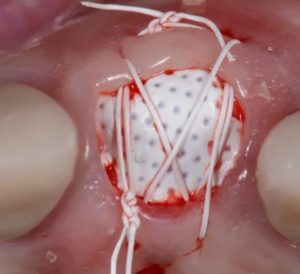
Socket preservation is performed immediately after a tooth extraction in selected cases.
The dentist places graft material into the empty tooth socket to help maintain the bone volume during healing.
Why is it done?
- To help reduce bone shrinkage after extraction.
- To preserve the shape of the extraction site.
- To support future dental implant planning.
It does not completely prevent natural bone remodelling, but it may help limit the loss of bone volume.
2. Ridge Augmentation
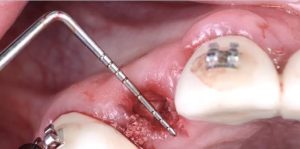
Ridge augmentation is used when the jawbone has become too narrow or has lost its natural shape.
The dentist adds graft material to the deficient area to increase the available bone volume.
Why is it done?
- To rebuild a narrow jawbone ridge.
- To improve the available bone width.
- To create a more suitable foundation for implant placement.
3. Sinus Lift Procedure
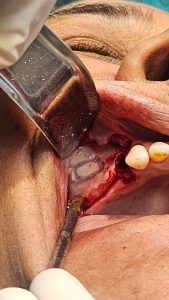
A sinus lift is a specialised bone augmentation procedure performed in the upper back jaw.
The maxillary sinus is an air-filled space located above the upper posterior teeth. After tooth loss, the bone beneath the sinus may become insufficient for implant placement.
During a sinus lift, the sinus membrane is carefully elevated, and bone graft material is placed beneath it to increase the available bone height.
Why is it done?
- When there is insufficient bone height in the upper back jaw.
- When the sinus is positioned too close to the planned implant site.
- When additional bone support is required for implant placement.
Not every patient with insufficient upper jawbone requires a sinus lift. The appropriate procedure depends on the anatomical findings.
4. Block Bone Grafting
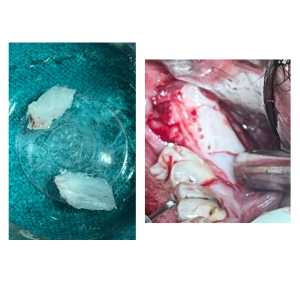
Block bone grafting may be considered when a larger area of bone needs reconstruction.
A small block of bone is obtained from an appropriate donor site or, in selected cases, another source and secured to the deficient jawbone.
Why is it done?
- To rebuild significant bone deficiencies.
- To restore areas where bone width or height is severely reduced.
- To prepare the jaw for possible future implant placement.
This is a more involved procedure, and the healing period depends on the extent of reconstruction.
What Materials Are Used in Dental Bone Grafting?
Different types of bone graft materials are available. The choice depends on the patient’s condition, the size of the defect and the dentist’s treatment plan.
The main categories include:
Bone graft material | Explanation |
Autograft |
Bone taken from the patient’s own body, such as another area of the jaw. |
Allograft |
Processed bone obtained from a human donor. |
Xenograft |
Bone-derived material obtained from another species, commonly bovine. |
Alloplast |
Synthetic bone graft material designed to support bone regeneration. |
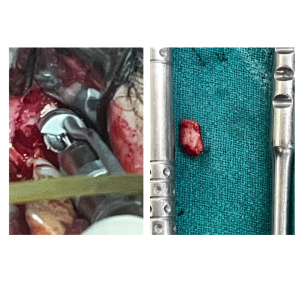
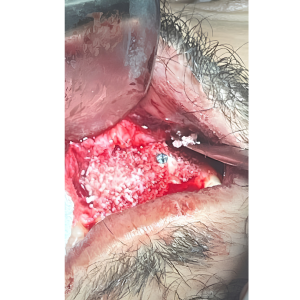
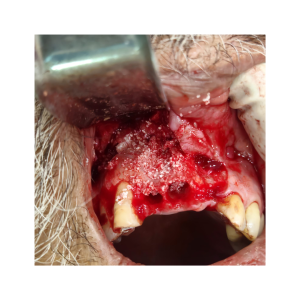
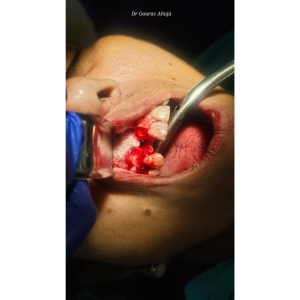
Each material has different properties and clinical applications.
In some cases, dentists may also use a membrane to protect the grafted area and support guided bone regeneration.
The most suitable material should be selected after evaluating the patient’s clinical requirements.
How Does the Bone Grafting Procedure Work?
The procedure generally involves several steps. The exact process varies depending on the type of graft and the extent of bone loss.
Step 1: Dental Examination and Bone Assessment
Before recommending bone grafting, the dentist examines the patient’s oral health and evaluates the jawbone.
This may include:
- Examination of the teeth and gums.
- Review of medical and dental history.
- Conventional dental X-rays.
- CBCT imaging when required.
- Assessment of the location and extent of bone deficiency.
A CBCT scan provides a three-dimensional view of the jawbone and nearby anatomical structures. It can help the dentist plan the grafting procedure and assess the implant site.
Step 2: Preparation of the Treatment Area
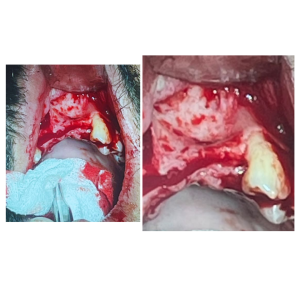
The treatment area is cleaned and prepared for the procedure.
Local anaesthesia is generally administered to numb the surgical site. The dentist then accesses the deficient bone area using an appropriate surgical approach.
Step 3: Placement of Bone Graft Material
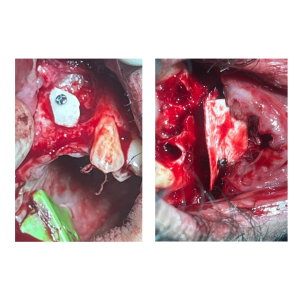
The selected graft material is carefully placed in the area where additional bone support is required.
Depending on the procedure, a protective membrane may also be placed over the graft.
Step 4: Closing the Surgical Area
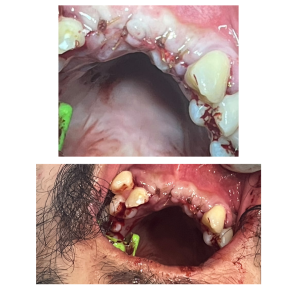
Once the graft material has been positioned, the surgical area is closed with sutures.
The dentist provides post-operative instructions to help protect the graft during the initial healing period.
Step 5: Healing and Bone Regeneration
The grafted area gradually heals as the surrounding tissues and bone respond to the graft material.
Depending on the graft type and the extent of bone reconstruction, healing may take several months.
Once the area has healed sufficiently, the dentist reassesses the site to determine whether dental implant placement can proceed.
How Long Does Bone Grafting Take to Heal?
Bone graft healing generally takes around 3 to 6 months, although some procedures may require less or considerably more time.
The exact duration depends on:
- The size of the bone defect.
- The type of graft material used.
- The location of the graft.
- The patient’s general health.
- Smoking and tobacco consumption.
- Oral hygiene and post-operative care.
- Whether additional procedures, such as a sinus lift, were performed.
Smaller grafting procedures may heal faster, while extensive bone reconstruction can require a longer healing period.
Your dentist will determine when the grafted area is ready for implant placement through clinical assessment and imaging when indicated.
Can Dental Implants Be Placed at the Same Time as Bone Grafting?
Yes. In selected cases, bone grafting and dental implant placement can be performed during the same surgical appointment.
This may be possible when sufficient native bone is available to provide adequate initial implant stability, even though some surrounding bone augmentation is needed.
However, if the bone deficiency is significant and the implant cannot achieve adequate stability, the dentist may recommend performing bone grafting first and placing the implant after the graft has healed.
The decision depends on:
- The amount of available natural bone.
- The size and location of the bone defect.
- Implant stability.
- The type of grafting procedure.
- The patient’s overall oral health.
Combining both procedures may reduce the number of surgical appointments in suitable cases, but it is not appropriate for every patient.
Is Bone Grafting Painful?
Bone grafting is generally performed under local anaesthesia, which numbs the treatment area during surgery.
Patients may experience some pressure or movement sensations, but the dentist should address any pain during the procedure.
After surgery, it is normal to experience some temporary symptoms, such as:
- Mild to moderate swelling.
- Tenderness around the surgical site.
- Minor bruising.
- Temporary discomfort while eating.
- Slight bleeding during the initial recovery period.
These symptoms usually improve as healing progresses.
Your dentist may recommend medication and provide specific instructions to manage discomfort.
Contact your dentist if you experience severe or increasing pain, persistent bleeding, fever, pus discharge or swelling that continues to worsen.
What Should You Eat After Bone Grafting?
Your diet plays an important role in protecting the surgical area during the initial healing period.
Choose foods that are soft, easy to chew and do not require excessive pressure around the grafted site.
Foods you may consider:
- Soft khichdi.
- Mashed potatoes.
- Curd and yoghurt.
- Well-cooked vegetables.
- Soft rice.
- Smooth soups that are not too hot.
- Scrambled eggs.
- Soft fruits such as bananas.
Foods and habits to avoid initially:
- Hard nuts and seeds.
- Chips and crunchy snacks.
- Very hot foods and drinks.
- Hard or chewy foods.
- Smoking and tobacco products.
- Chewing directly over the surgical area.
Follow the dietary instructions provided by your dentist, as recommendations may vary depending on the procedure.
What Precautions Should You Take After Bone Grafting?
Proper aftercare helps protect the grafted area and reduces the risk of complications.
Keep these precautions in mind:
- Follow medication instructions: Take prescribed medicines according to your dentist’s advice.
- Maintain oral hygiene: Clean your mouth carefully without disturbing the surgical site.
- Avoid smoking: Tobacco can interfere with healing and increase the risk of complications.
- Do not disturb the graft: Avoid touching the area with your fingers or tongue.
- Avoid strenuous activity initially: Give your body time to recover and follow your dentist’s recommendations.
- Attend follow-up appointments: Your dentist needs to monitor the healing process.
- Report unusual symptoms: Seek professional advice if you notice increasing pain, swelling, bleeding or discharge.
Do not stop prescribed medication or change your aftercare routine without consulting your dentist.
What Happens If You Do Not Have Enough Bone for Dental Implants?
Insufficient jawbone does not automatically mean that dental implants are impossible.
Depending on the condition, a dentist may consider:
- Bone grafting to increase the available bone volume.
- Sinus lift procedures for selected upper jaw cases.
- Alternative implant positions or treatment designs.
- Specialised implant approaches for selected patients.
- Other tooth replacement options, such as dental bridges or removable dentures.
The most suitable option depends on the amount of bone available, the patient’s oral health and the overall treatment requirements.
It is important not to assume that every patient with bone loss needs a graft or that every patient can undergo implant treatment after grafting. A proper clinical evaluation is necessary.
What Is the Difference Between Bone Grafting and a Sinus Lift?
Bone grafting is a broad term for procedures used to increase or rebuild bone in areas where bone volume is insufficient.
A sinus lift is a specific type of bone augmentation procedure performed in the upper back jaw.
Bone grafting | Sinus lift |
Can be performed in different areas of the jaw. | Specifically performed in the upper posterior jaw. |
Used to address different types of bone deficiencies. | Used to increase available bone height beneath the maxillary sinus. |
May involve socket preservation, ridge augmentation or block grafting. | Involves elevating the sinus membrane and placing graft material beneath it. |
Procedure depends on the location and size of bone loss. | Procedure depends on sinus anatomy and available bone height. |
A sinus lift is therefore one specialised form of bone augmentation, rather than a completely separate concept.
How to Choose the Best Dentist in Mohali for Bone Grafting and Dental Implants?
Bone grafting requires careful diagnosis and surgical planning. Choosing a dentist based only on treatment cost or promises of quick results may lead to an incomplete understanding of your treatment needs.
If you are searching for the best dentist in Mohali for bone grafting or dental implant treatment, consider the following points:
- Check qualifications and clinical experience: Understand the dentist’s education, surgical training and experience with implant-related procedures.
- Ask about bone assessment: Your treatment plan should be based on an appropriate clinical examination and imaging when required.
- Understand the recommended procedure: Ask why bone grafting is necessary and which technique is suitable for your condition.
- Discuss graft material: Understand which material is being used and why it has been selected.
- Ask about the healing timeline: The dentist should explain the expected recovery period before implant placement.
- Understand the complete cost: Ask whether the estimate includes graft material, surgery, scans, membranes, follow-up appointments and implant treatment.
- Discuss possible risks: Understand potential complications and the aftercare required.
- Check follow-up arrangements: Bone grafting requires monitoring to assess healing and determine when implant placement is appropriate.
At Elite Dental & Implant Clinic, Dr. Gaurav Ahuja (BDS, MDS in Oral & Maxillofacial Surgery, Gold Medalist) evaluates patients for implant-related procedures based on their individual clinical requirements.
Patients considering the best dental implant in Mohali should understand that successful treatment planning involves more than selecting an implant. Bone condition, gum health, surgical planning and long-term maintenance all matter.
Frequently Asked Questions About Bone Grafting for Dental Implants
1. Is bone grafting necessary for every dental implant?
No. Many patients have sufficient natural jawbone for implant placement and do not require bone grafting. It is recommended only when additional bone support is clinically necessary.
2. Can I get dental implants if I have experienced bone loss?
Yes, selected patients with bone loss may still be candidates for dental implants. Bone grafting or other specialised procedures may be considered depending on the extent and location of the bone deficiency.
3. How long after bone grafting can I get a dental implant?
Many patients may need around 3 to 6 months of healing before implant placement. However, the duration varies depending on the procedure, graft size and individual healing.
4. Does bone grafting guarantee successful dental implants?
No. Bone grafting can help create suitable conditions for implant placement, but it does not guarantee implant success. Healing, oral hygiene, medical conditions, surgical factors and ongoing maintenance also influence outcomes.
5. Can bone grafting be done after tooth extraction?
Yes. In selected cases, socket preservation or other grafting procedures can be performed at the time of extraction. The decision depends on the condition of the extraction site and the future treatment plan.
6. Is bone grafting safe?
Bone grafting is an established dental procedure, but like any surgery, it carries potential risks. These may include infection, swelling, graft exposure, delayed healing or graft failure. Your dentist should explain the risks relevant to your case.
7. Can the body reject a bone graft?
Bone graft materials do not all behave in the same way. Complications such as poor integration, infection or graft failure can occur. The dentist selects the material and procedure according to the patient’s clinical needs.
8. Is bone grafting expensive?
The cost depends on the size of the bone defect, graft material, surgical technique, location and whether additional procedures are required. Patients should request a complete treatment estimate rather than comparing only the basic grafting fee.
9. Can I eat normally after bone grafting?
You will generally need to eat soft foods initially and avoid chewing directly over the surgical area. Your dentist will guide you on when you can gradually return to your normal diet.
10. Does everyone with a missing tooth need a bone graft?
No. A missing tooth does not automatically mean that the jawbone is insufficient. A clinical examination and appropriate imaging help determine whether grafting is needed.
Conclusion
Bone grafting can play an important role in dental implant treatment when the jawbone does not have sufficient volume to support an implant. It helps rebuild deficient areas and may create better conditions for future implant placement.
However, the procedure is not necessary for every patient. The decision depends on the extent of bone loss, the location of the missing tooth, overall oral health and the planned implant treatment.
If you have been told that you do not have enough bone for dental implants, consider getting a proper evaluation before ruling out your treatment options.
If you are looking for the best dentist in Mohali or exploring options for the best dental implant in Mohali, consult an experienced dental professional who can assess your jawbone, explain the available procedures and recommend a treatment plan based on your individual needs.
Consult Dr. Gaurav Ahuja at Elite Dental & Implant Clinic
