
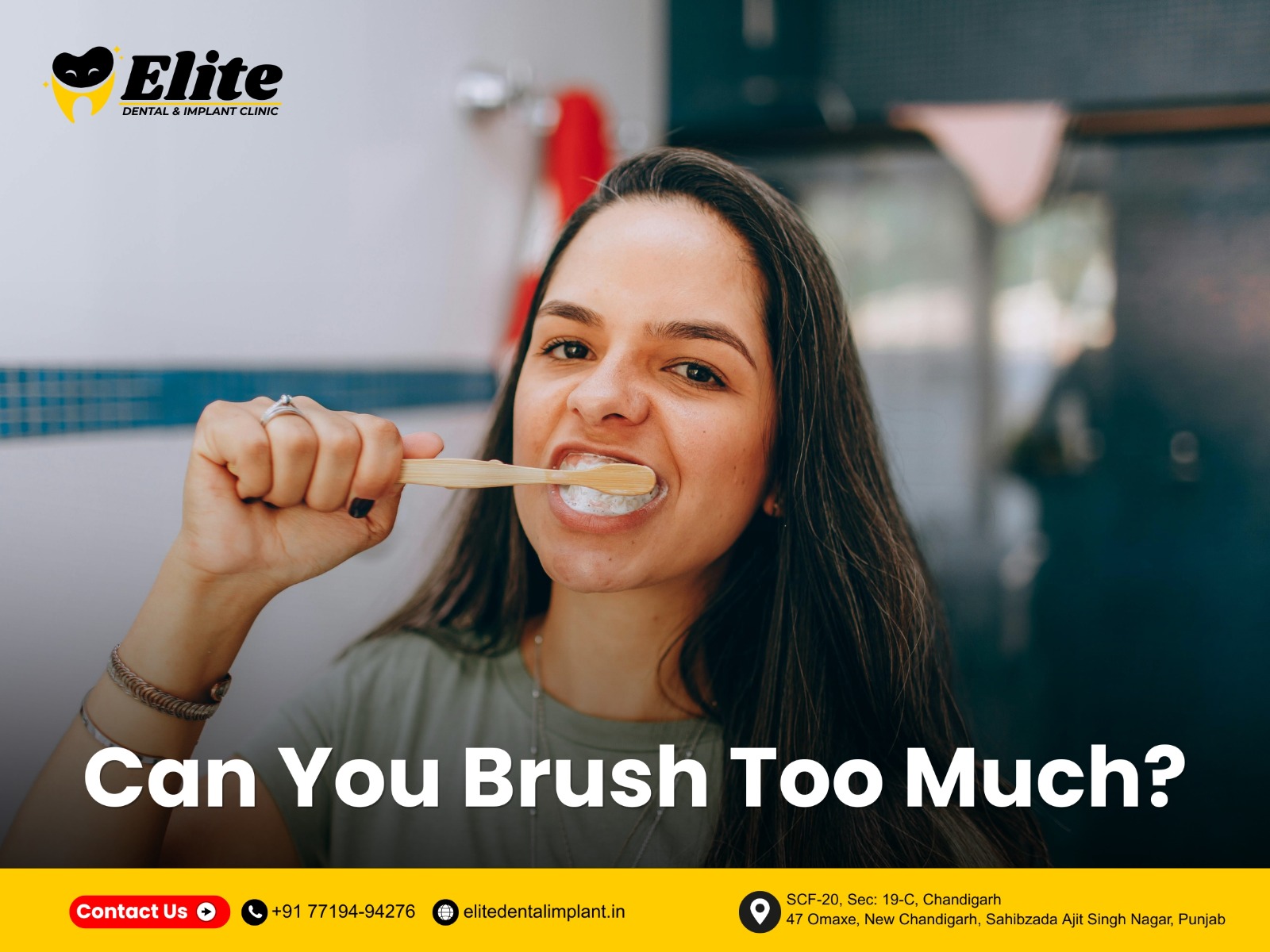
Can You Brush Too Much?
Yes — brushing too much or brushing too hard can actually damage your teeth and gums.
Over-brushing = Brushing too hard, too often, or using improper technique
Brushing is essential for oral hygiene, but over-frequent brushing may lead to:
- Enamel wear
- Gum recession
- Tooth sensitivity
- Gum irritation
Healthy brushing is about technique and consistency, not aggressive scrubbing. Many people think harder brushing means cleaner teeth, but dentistry says otherwise.
Can Brushing Too Hard Damage Teeth?
Yes. Enamel is the strongest substance in the body, but it is not indestructible.
What Happens?
Aggressive brushing creates repeated friction on teeth and gums. Over time, this may cause:
- Enamel erosion
- Exposed tooth roots
- Increased sensitivity
- Gum recession
The Risks of Over-Brushing
1. Enamel Wear
Enamel = The protective outer layer of the tooth
Once enamel wears away, it does not grow back naturally.
Signs of Enamel Wear
- Yellow-looking teeth
- Sensitivity to cold foods
- Transparent tooth edges
- Increased risk of cavities
2. Gum Recession
Brushing aggressively can push gums away from teeth.
Why It Matters
Receding gums expose sensitive tooth roots and increase the risk of:
- Sensitivity
- Root decay
- Gum inflammation
3. Tooth Sensitivity
Over-brushing may expose the dentin layer beneath enamel.
Common Symptoms
- Sharp pain while eating ice cream
- Sensitivity to hot drinks
- Discomfort while brushing
4. Damage Around Dental Work
Excessive brushing may affect:
- Fillings
- Crowns
- Veneers
- Gum tissue around implants
At Elite Dental & Implant Clinic, patients searching for the best dental implant in Chandigarh are often educated about gentle brushing techniques to protect both natural teeth and implant restorations long-term.
How Brushing Can Go Wrong
Using a Hard-Bristle Toothbrush
Hard bristles increase friction against teeth and gums.
Better Choice
Soft-bristle toothbrushes are safer and equally effective.
Brushing Immediately After Acidic Foods
After consuming:
- Soda
- Citrus fruits
- Vinegar-based foods
the enamel temporarily softens.
Brushing immediately may increase enamel erosion.
Better Approach
Wait 30 minutes before brushing.
Scrubbing Side-to-Side Aggressively
Many people brush using harsh horizontal movements.
This may:
- Damage gums
- Create abrasion grooves near the gumline
Signs You Might Be Over-Brushing
Common Warning Signs
- Bleeding gums
- Tooth sensitivity
- Receding gums
- Frayed toothbrush bristles quickly
- Teeth looking worn near the gumline
If your toothbrush flattens quickly, you may be brushing too aggressively.
The Ideal Brushing Routine
How Often Should You Brush?
Recommended Routine
✔ Twice daily
✔ 2 minutes each time
More brushing does not always mean healthier teeth.
Best Brushing Technique
Dentists Commonly Recommend:
- Gentle circular motions
- Soft pressure
- Cleaning all tooth surfaces evenly
Avoid:
✘ Hard scrubbing
✘ Excessive pressure
✘ Rushing through brushing
Prevention Through Proper Brushing Technique and Tools
Choose the Right Toothbrush
Best Option
✔ Soft-bristle toothbrush
Soft bristles clean effectively without excessive abrasion.
Replace Your Toothbrush Regularly
Recommended:
Every 3 months or sooner if bristles fray.
Use Non-Abrasive Toothpaste
Some whitening toothpastes are highly abrasive.
Over time, aggressive whitening products may contribute to enamel wear.
Electric Toothbrushes Can Help
Many electric brushes:
- Apply controlled pressure
- Improve brushing consistency
- Reduce over-scrubbing
Some even alert users when brushing too hard.
Myths About Brushing
Myth 1: Harder Brushing Cleans Better
False.
Plaque removal depends more on proper technique than force.
Myth 2: Brushing More Than 3 Times Is Always Better
Not necessarily.
Frequent aggressive brushing may damage oral tissues.
Myth 3: Bleeding Means You Should Brush Harder
False.
Bleeding gums usually indicate:
- Inflammation
- Gum disease
- Improper brushing habits
Can Over-Brushing Affect Children?
Yes. Children have:
- Softer enamel
- More delicate gums
Parents should teach:
✔ Gentle brushing
✔ Proper technique
✔ Correct brushing duration
What Dentists Look for During Check-Ups
Dentists can often identify signs of over-brushing early.
Common Clinical Signs
- Gum recession
- Cervical abrasion lesions
- Sensitivity patterns
- Worn enamel
Patients looking for the best dentist in Chandigarh often benefit from preventive dental education—not just treatment after damage occurs.
FAQs About Brushing
Is brushing 3 times a day harmful?
Not always. The problem is usually aggressive brushing, not frequency alone.
Should gums bleed while brushing?
No. Bleeding gums may indicate gum inflammation or improper brushing technique.
Is a hard toothbrush better for plaque removal?
No. Soft-bristle brushes remove plaque effectively while being safer for gums and enamel.
Can brushing damage dental implants?
Improper brushing around implants may irritate gums and affect oral hygiene maintenance.
Gentle cleaning is important for long-term implant success.
How much pressure should I use while brushing?
Only light pressure is needed. Think of brushing as “massaging” the teeth and gums rather than scrubbing them.
Final Thoughts
Brushing is one of the most important habits for oral health—but brushing harder does not mean brushing better. Healthy brushing depends on:
- Correct technique
- Proper tools
- Gentle pressure
- Consistency
Preventive care is always easier than repairing enamel or gum damage later.
If you experience sensitivity, gum recession, or discomfort while brushing, professional dental evaluation can help identify whether your brushing habits are helping—or harming—your oral health.
Foods That Help Keep Your Teeth and Gums Healthy
