
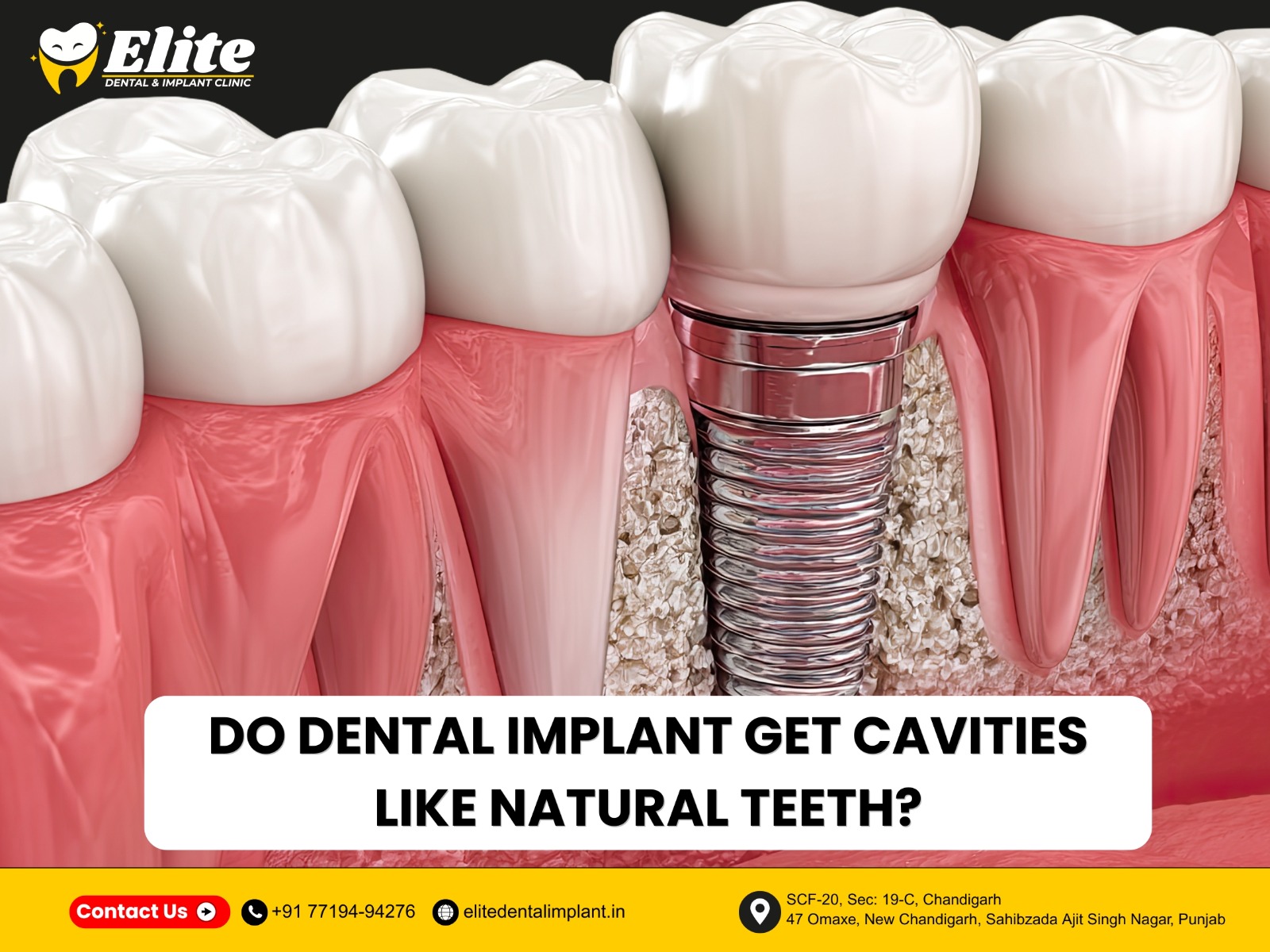
Do Dental Implant get cavities like natural teeth?
No —Dental implants cannot get cavities because they are artificial tooth replacements, not natural teeth. But:
- Plaque can still build around implants
- Gum disease can still occur
- Bone support can still weaken
This is because dental implants are made from artificial materials such as titanium and ceramic, which cannot decay like natural tooth enamel.
However, this does NOT mean dental implants are maintenance-free.
While implants cannot develop cavities, the gums and surrounding bone around the implant can still develop infections and inflammation if oral hygiene is neglected.
Healthy gums are just as important for implants as they are for natural teeth.
Why Natural Teeth Get Cavities
Cavities form when:
- Oral bacteria feed on sugars
- Acid is produced
- Tooth enamel slowly breaks down
Cavities = Permanent damage caused by acid attacking natural tooth enamel
Natural teeth contain enamel and dentin — both can decay.
Dental implants do not contain natural enamel, so they cannot decay in the same way.
What Are Dental Implants Made Of?
Most dental implants consist of:
- Titanium implant post
- Abutment connector
- Ceramic or porcelain crown
These materials are highly durable and resistant to decay.
This is one reason many patients searching for the best dental implant in Chandigarh choose implants as a long-term tooth replacement solution.
If Implants Don’t Get Cavities, Why Is Cleaning Important?
Because the surrounding tissues are still natural and vulnerable.
Areas Around the Implant Can Still Develop:
- Plaque buildup
- Gum inflammation
- Bone loss
- Infection
The implant itself may survive, but unhealthy surrounding tissues can affect implant stability over time.
Can You Get Gum Disease With Dental Implants?
Yes. This is one of the most important things patients should understand.
Gum disease around implants is called Peri-Implant Disease. There are two major stages:
1. Peri-Implant Mucositis
This is the early stage of inflammation around the implant.
Common Signs
- Red gums
- Bleeding while brushing
- Mild swelling
- Bad breath
At this stage, the condition is usually reversible with proper care.
2. Peri-Implantitis
This is a more advanced infection affecting:
- Gum tissue
- Bone around the implant
Signs May Include
- Gum recession
- Pain
- Implant looseness
- Bone loss
Without treatment, implant failure may occur.
Why Do Some Implant Failures Happen?
Most implant failures are not because the implant “got damaged.” They are usually linked to:
- Poor oral hygiene
- Smoking
- Uncontrolled diabetes
- Gum disease
- Lack of follow-up care
Important Insight
Even the best implant treatment requires long-term maintenance.
At Elite Dental & Implant Clinic, patients looking for the best dental implant in Chandigarh are educated about both implant placement and long-term implant care.
Caring for Dental Implants
Dental implants should be cleaned just like natural teeth.
Daily Implant Care Includes
✔ Brushing twice daily
✔ Flossing around implants
✔ Using soft-bristle brushes
✔ Professional cleaning visits
✔ Regular dental check-ups
Can Food Get Stuck Around Implants?
Yes. Food accumulation around implants may lead to plaque buildup and gum inflammation if not cleaned properly.
This is why proper oral hygiene technique matters even after successful implant placement.
What Is the 3/2 Rule for Dental Implants?
The “3/2 Rule” is a simplified guideline sometimes used in implant planning discussions.
It generally refers to:
- Maintaining adequate spacing between implants
- Preserving healthy bone support
- Ensuring proper distribution of chewing forces
Why It Matters
Correct implant spacing improves:
✔ Bone stability
✔ Gum health
✔ Long-term implant success
✔ Natural appearance
Proper planning is one of the key factors behind predictable implant outcomes.
Modern Dental Implant Solutions
Modern implant dentistry is far more advanced than before.
Today’s implant treatments focus on:
- Precision planning
- Digital imaging
- Bone preservation
- Faster healing
- Natural aesthetics
- Long-term functionality
Modern Technologies Often Include
- CBCT scans
- Guided implant surgery
- Immediate loading protocols
- Digital smile planning
Patients searching for the best dentist in Chandigarh often prioritize clinics that combine advanced technology with personalized treatment planning.
Can Children Get Dental Implants?
Usually, dental implants are recommended only after jaw growth is complete.
For younger patients, temporary restorative solutions may be advised until full skeletal development occurs.
How Long Do Dental Implants Last?
With proper care, implants can last many years — often decades.
Long-Term Success Depends On
- Oral hygiene
- Gum health
- Bone support
- Regular follow-ups
- Lifestyle habits
The implant crown may sometimes need replacement over time due to wear, but the implant post itself can remain stable for years.
Are Dental Implants Better Than Dentures?
It depends on the patient’s condition.
Dental Implants
✔ Fixed solution
✔ More stable
✔ Preserve bone better
✔ Feel more natural
Dentures
✔ Non-surgical option
✔ More affordable initially
✔ Suitable for some medical conditions
A proper consultation helps determine the right treatment plan.
Frequently Asked Questions (FAQs)
Can dental implants ever decay?
No. Dental implants themselves cannot decay because they are made from artificial materials. However, the surrounding gums and bone can still become infected if oral hygiene is poor.
Why do implants still need cleaning if they cannot get cavities?
Because bacteria and plaque can still collect around the implant. Poor cleaning may lead to gum disease, inflammation, and bone loss around the implant area.
Can smoking affect dental implants?
Yes. Smoking significantly increases the risk of implant complications because it affects healing, blood circulation, and gum health.
Do dental implants require special toothpaste?
Usually, non-abrasive toothpaste is recommended. Harsh abrasive products may irritate implant surfaces and surrounding tissues over time.
Can gum disease cause implant failure?
Yes. Advanced gum infection around implants (peri-implantitis) is one of the major causes of implant failure if left untreated.
How often should implant patients visit the dentist?
Most implant patients should have regular professional check-ups every 6 months, or more frequently if advised by the dentist.
Are dental implants difficult to maintain?
Not usually. Once healed properly, implants can be maintained with good brushing, flossing, and routine professional care.
Final Thoughts
Dental implants do not get cavities like natural teeth because they are made from artificial materials.
But healthy implants still depend heavily on:
- Healthy gums
- Strong bone support
- Good oral hygiene
- Regular dental care
Implants are not “maintenance-free teeth.” They require proper long-term care to remain healthy and functional.
With correct treatment planning and good maintenance habits, dental implants can provide a strong, natural-looking, and long-lasting solution for missing teeth.
