
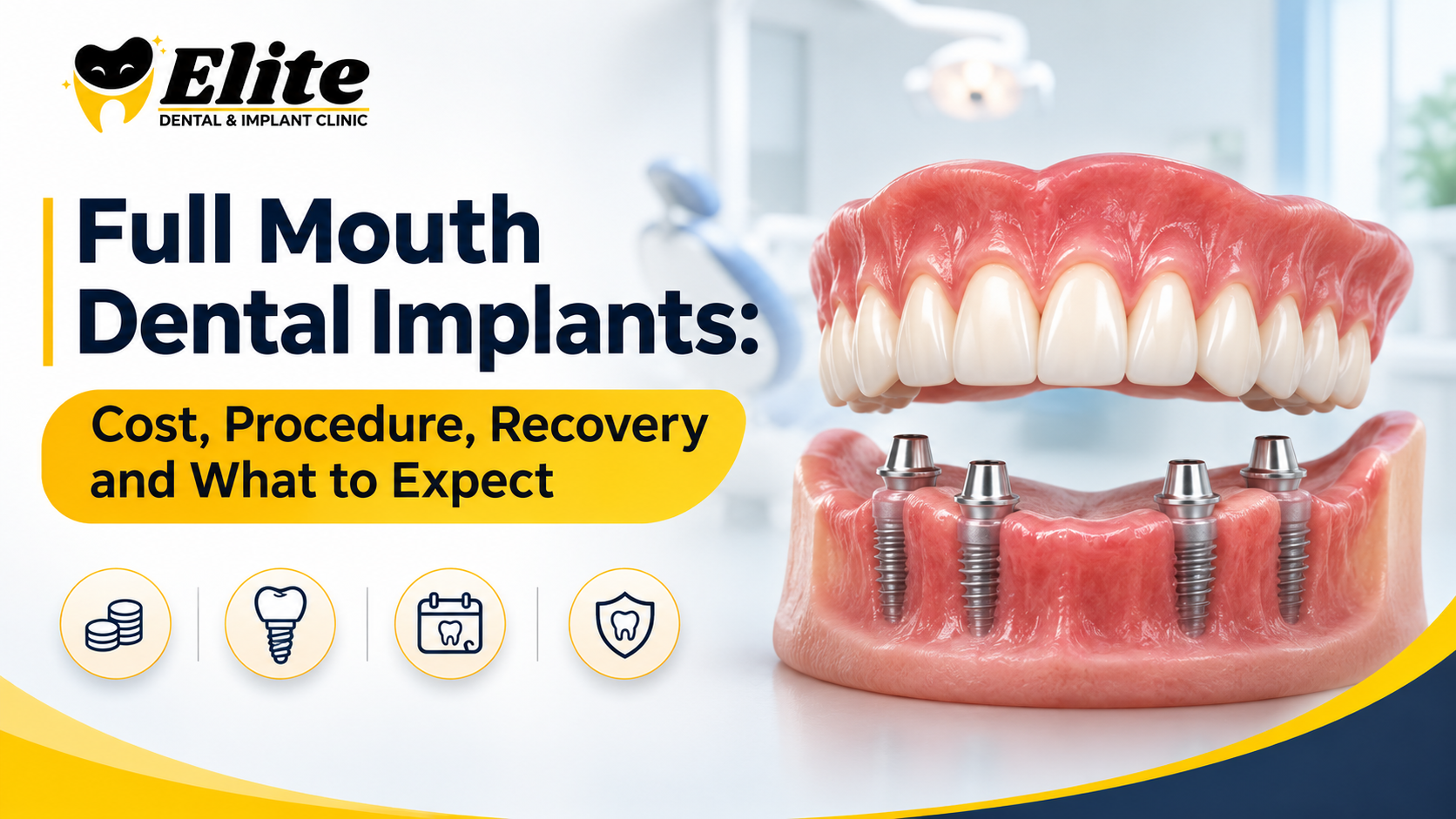
Full Mouth Dental Implants: Cost, Procedure, Recovery and What to Expect
Losing most or all of your natural teeth can affect your ability to eat, speak and smile comfortably. Full mouth dental implants offer a treatment option for people who need to replace multiple missing or severely damaged teeth. The procedure uses dental implants placed in the jawbone to support a complete set of replacement teeth.
The full mouth dental implant cost depends on several factors, including the number of implants required, the implant system, the material used for replacement teeth, the condition of the jawbone and whether additional procedures such as tooth extraction or bone grafting are needed.
Depending on the patient’s oral health and bone condition, treatment may involve All-on-4, All-on-6, multiple implant-supported bridges or specialised implant techniques. Some suitable patients may receive temporary fixed teeth shortly after implant placement, while others need a healing period before receiving their final teeth.
If you are considering full mouth dental implants, understanding the available treatment options, procedure, cost and recovery can help you make an informed decision.
What Are Full Mouth Dental Implants?
Full mouth dental implants are used to replace most or all missing teeth in the upper jaw, lower jaw or both. The treatment involves placing dental implants inside the jawbone to act as artificial tooth roots.
These implants provide support for replacement teeth, which may be designed as fixed bridges or implant-supported removable dentures.
Unlike traditional dentures that rest on the gums, implant-supported teeth are anchored to dental implants. This can provide better stability and support for chewing and speaking in suitable patients.
Full mouth dental implants do not always mean placing one implant for every missing tooth. Depending on the treatment plan, several strategically positioned implants may support a complete set of replacement teeth.
The choice of treatment depends on the patient’s jawbone condition, gum health, number of missing teeth, bite and overall oral health.
Who May Need Full Mouth Dental Implants?
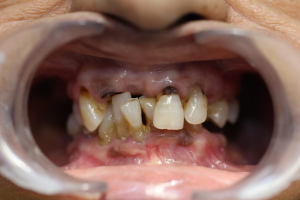
Full mouth dental implant treatment may be considered for people who have lost most or all of their natural teeth or have several severely damaged teeth that cannot be restored.
You may be evaluated for this treatment if you:
- Have lost most or all of your teeth: Missing teeth can affect chewing, speech and facial appearance.
- Have severely damaged or loose teeth: Advanced tooth decay or gum disease may make some teeth difficult to save.
- Experience problems with traditional dentures: Loose dentures, gum irritation and difficulty chewing may affect everyday comfort.
- Have significant tooth loss due to gum disease: Advanced periodontal disease can damage the tissues and bone supporting natural teeth.
- Find it difficult to eat: Missing multiple teeth can make chewing certain foods challenging.
- Want an alternative to removable dentures: Some patients prefer fixed implant-supported replacement teeth.
However, having multiple missing teeth does not automatically mean you need full mouth dental implants. A dentist should first examine whether any remaining natural teeth can be saved. Healthy or treatable teeth should not be removed unnecessarily.
Different Types of Full Mouth Dental Implant Treatments
There is no single implant technique suitable for every patient. The dentist selects the treatment approach based on bone availability, oral health, implant positioning, bite forces and the design of the replacement teeth.
Here are some commonly used options.
All-on-4 Dental Implants
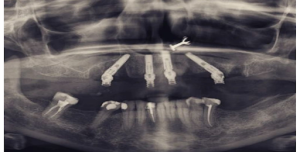

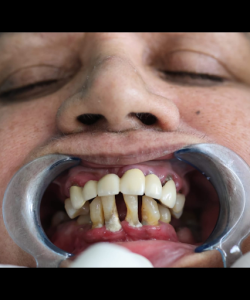
All-on-4 is a treatment approach in which four strategically positioned dental implants support a full-arch set of replacement teeth.
In this technique:
- Four implants are placed at planned positions in the jaw.
- Some posterior implants may be angled to make better use of the available bone.
- A full-arch bridge is attached to the supporting implants.
- Temporary fixed teeth may be provided shortly after surgery in selected cases.
All-on-4 may be considered for patients who need to replace most or all teeth in one jaw. However, bone availability, implant stability, bite forces and overall oral health must be assessed before recommending this approach.
All-on-6 Dental Implants
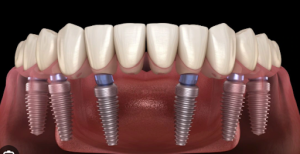
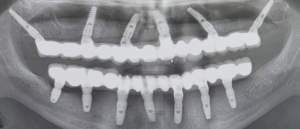

All-on-6 uses six dental implants to support a full-arch set of replacement teeth.
The additional implants may help distribute chewing forces across the supporting implants, depending on the patient’s anatomy and treatment design.
This approach may be considered when the available bone and clinical conditions allow the placement of six implants.
All-on-4 and All-on-6 are not competing options where one is automatically better. The appropriate choice depends on the patient’s clinical requirements and the planned restoration.
Implant-Supported Dental Bridges
In some cases, multiple implants are placed to support fixed dental bridges that replace different sections of the dental arch.
The number and position of implants depend on the length of the missing tooth area, available bone and the planned bridge design.
This approach may be considered when a patient requires replacement of several missing teeth across the upper or lower jaw.
Implant-Supported Removable Dentures
Not every patient wants or needs permanently fixed replacement teeth.
Implant-supported removable dentures attach to dental implants using special connectors. They can be removed for cleaning and may offer better stability than conventional dentures.
This can be an option for selected patients who want improved denture retention without choosing a fixed full-arch restoration.
Zygomatic and Pterygoid Implants: Options for Selected Patients
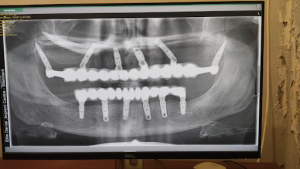


Patients with severe bone loss in the upper jaw may require specialised implant approaches.
Zygomatic and pterygoid implants use alternative anchorage areas to support implant-based restorations in carefully selected cases. These techniques may be considered when conventional implant placement is limited by insufficient bone in the upper jaw.
They involve advanced surgical planning and are not routine alternatives for every patient with bone loss. A detailed clinical and radiographic assessment is essential before considering them.
Immediate Loading: Can You Get Fixed Teeth in One Day?
Immediate loading is a treatment approach in which temporary fixed replacement teeth may be attached to dental implants on the same day as surgery or within a short period after implant placement.
For suitable patients, this can reduce the time spent without fixed teeth.
However, immediate loading is not possible in every case. Several clinical conditions must be considered, including:
- Adequate initial implant stability.
- Favourable bone conditions.
- Appropriate implant positioning and distribution.
- Controlled bite forces.
- A suitable design for the temporary prosthesis.
If these conditions are not met, the dentist may recommend allowing the implants to heal before attaching the replacement teeth.
It is important to understand that receiving temporary fixed teeth on the day of surgery does not mean the complete treatment is finished. The implants still need time to integrate with the jawbone before the final prosthesis can be fitted.
Benefits of Full Mouth Dental Implants
Full mouth dental implants may offer several functional and aesthetic benefits for suitable patients.
- Improved Chewing Function
Implant-supported replacement teeth can provide a stable chewing surface and help patients manage a wider range of foods after the appropriate healing period.
- Better Stability
Fixed implant-supported teeth are anchored to dental implants rather than resting directly on the gums like conventional dentures.
- Natural-Looking Smile
Replacement teeth can be designed to complement the patient’s facial features, tooth shape and smile.
- Speech Support
Properly designed replacement teeth may help improve speech difficulties associated with missing teeth or unstable dentures.
- Improved Confidence
Restoring missing teeth may help patients feel more comfortable when smiling, speaking and interacting socially.
- Support for Jawbone Health
Dental implants transfer functional forces to the jawbone. This can help maintain bone stimulation in the areas where implants are placed, although it does not prevent all bone changes.
- Long-Term Tooth Replacement Option
With appropriate treatment planning, oral hygiene and regular professional maintenance, dental implants can provide a long-lasting tooth replacement option. However, the implants and prosthetic teeth still require ongoing care.
What Is the Procedure for Full Mouth Dental Implants?
Full mouth dental implant treatment involves several stages. The exact procedure depends on the patient’s oral health, bone condition and selected implant approach.
Step 1: Initial Consultation and Dental Examination
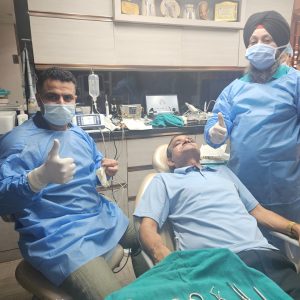
The dentist begins by examining the patient’s teeth, gums and jawbone.
During the consultation, the dentist may:
- Review the patient’s medical and dental history.
- Examine remaining teeth and gum condition.
- Identify missing, damaged or infected teeth.
- Discuss the patient’s treatment expectations.
- Explain available treatment options.
- Recommend diagnostic investigations when required.
This examination helps determine whether full mouth dental implant treatment is appropriate.
Step 2: CBCT Scan and Digital Treatment Planning
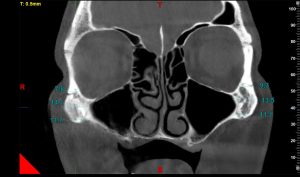
A CBCT scan may be recommended to obtain a three-dimensional view of the jawbone and surrounding anatomical structures.
It helps the dentist assess:
- Available bone height and width.
- The position of important nerves.
- The location of the maxillary sinus.
- Areas where implants may be placed.
- Whether additional procedures may be required.
Digital implant planning can help determine suitable implant positions and guide the surgical and prosthetic treatment plan.
CBCT is not required in exactly the same way for every patient. The need for imaging depends on the individual clinical case.
Step 3: Tooth Extraction, If Required
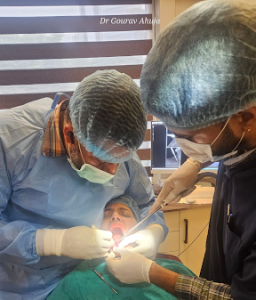
If some remaining teeth are severely damaged or cannot be restored, they may need to be removed before or during implant treatment.
However, extraction should only be recommended when the teeth cannot reasonably be saved or when removal is necessary for the planned rehabilitation.
Step 4: Dental Implant Placement
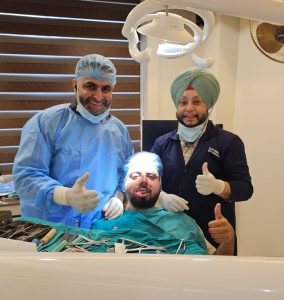
Once the treatment area is ready, dental implants are surgically placed into the jawbone according to the planned treatment protocol.
The procedure generally involves:
- Administering local anaesthesia.
- Preparing the planned implant sites.
- Placing the implants in the jawbone.
- Closing or protecting the surgical areas.
- Providing post-operative instructions.
The duration depends on the number of implants being placed and whether additional surgical procedures are required.
Step 5: Provisional Teeth
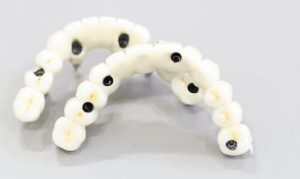
After implant placement, provisional teeth may be provided to suitable patients, depending on implant stability, bone conditions and the planned treatment protocol.
These temporary teeth are designed to provide an interim replacement while the implants heal and integrate with the jawbone.
Provisional teeth may help patients maintain their appearance and basic oral function during the healing period. However, they are not the final prosthesis and may have specific dietary and chewing restrictions.
The dentist will explain how to care for the provisional teeth and which foods or activities should be avoided during recovery.
Not every patient is suitable for immediate provisional teeth. In some cases, the dentist may recommend allowing the implants to heal before attaching a restoration.
Step 5: Final Prosthesis
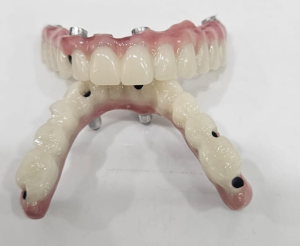
Once the implants have integrated sufficiently with the jawbone and the dentist confirms that the area is ready, the final prosthesis is planned and fitted.
The final prosthesis is the definitive set of replacement teeth designed according to the patient’s bite, oral anatomy and functional requirements.
This stage may involve:
- Taking dental impressions or digital scans.
- Assessing the implant positions and healing.
- Selecting an appropriate prosthetic material.
- Checking the shape, appearance and fit of the replacement teeth.
- Evaluating the bite and making necessary adjustments.
- Fitting the final prosthesis.
The final restoration is designed to provide appropriate support, function and appearance. The patient also receives instructions on cleaning and maintaining the prosthesis.
Step 6: Healing and Osseointegration
After implant placement, the jawbone gradually heals around the implants.
This process is called osseointegration. It allows the bone to integrate with the implant surface and provide support for the replacement teeth.
The healing period commonly takes several months, although the exact duration varies between patients.
The dentist monitors the healing process and checks whether the implants are ready to support the final restoration.
Step 7: Final Teeth Placement
Once the implants have healed sufficiently, the final replacement teeth are prepared and fitted.
This stage may involve:
- Taking impressions or digital scans.
- Selecting an appropriate restoration material.
- Checking the shape and appearance of the replacement teeth.
- Adjusting the bite.
- Attaching the final prosthesis.
The dentist also explains how to clean and maintain the replacement teeth.
What Is the Full Mouth Dental Implant Cost?
The full mouth dental implant cost can vary significantly from one patient to another because every treatment plan is different.
The total price depends on the number of implants, implant system, type of restoration, materials used and whether additional dental procedures are required.
Instead of comparing only the starting prices advertised by different clinics, it is important to understand what is included in the complete treatment.
Factors That Affect Full Mouth Dental Implant Cost
- Number of Dental Implants
The number of implants required depends on the treatment approach. For example, All-on-4 and All-on-6 use different implant configurations.
- Implant Brand and System
Different implant systems have different designs, components and costs. Your dentist should explain which implant system is being recommended and why it is suitable for your case.
- Material Used for Replacement Teeth
The final teeth may be made from different materials depending on the restoration design and treatment requirements.
The material can influence appearance, strength, maintenance and overall cost.
- Condition of the Jawbone
Patients with insufficient bone may require additional procedures such as bone grafting or a sinus lift. These procedures can increase the overall treatment cost and duration.
- Tooth Extractions
If several damaged or infected teeth need to be removed, extraction charges may be included in the treatment estimate.
- Temporary and Final Teeth
Some treatment plans include temporary teeth, while others may charge separately for provisional and final restorations. Always confirm this before starting treatment.
- Diagnostic Tests and Follow-Up
X-rays, CBCT scans, laboratory work, review appointments and adjustments may also affect the total amount.
What Should Be Included in a Cost Estimate?
Before agreeing to treatment, ask your dentist for a written estimate covering the complete process.
Treatment component | What to confirm |
Initial consultation | Whether consultation charges apply |
Diagnostic tests | X-rays, CBCT and other investigations |
Dental implants | Number, brand and system |
Surgical procedure | Implant placement and surgical charges |
Bone grafting | Whether additional grafting is required |
Temporary teeth | Whether provisional teeth are included |
Final restoration | Material and type of final teeth |
Follow-up visits | Adjustments and routine reviews |
A low starting price does not always represent the complete treatment cost. Request a clear breakdown so you understand what is included and whether additional charges may apply.
At Elite Dental & Implant Clinic, patients can discuss their treatment requirements and estimated costs during consultation. The final estimate should be based on an individual examination rather than a general advertised price.
How Long Does Full Mouth Dental Implant Treatment Take?
Full mouth dental implant treatment may take several months, depending on the patient’s condition and the type of restoration.
Some suitable patients may receive temporary fixed teeth soon after surgery, while others may need to wait for the implants to heal before receiving their replacement teeth.
The overall treatment timeline may involve:
- Initial consultation: Examination and treatment planning.
- Surgical stage: Placement of implants and any required additional procedures.
- Initial recovery: Healing of the surgical area.
- Osseointegration: Gradual integration of implants with the jawbone.
- Final restoration: Preparation and placement of the final replacement teeth.
Bone grafting, gum disease, medical conditions and the complexity of surgery may extend the treatment period.
Your dentist should explain the expected timeline before treatment begins.
What Is Recovery Like After Full Mouth Dental Implant Surgery?
Recovery is an important part of full-mouth implant treatment. Since several implants may be placed during the same treatment, patients need to follow their dentist’s instructions carefully.
First 24–72 Hours
Some temporary symptoms may occur after surgery, including:
- Swelling around the surgical area.
- Mild to moderate discomfort.
- Minor bleeding.
- Bruising.
- Difficulty chewing.
Your dentist may prescribe medication and provide instructions to manage these symptoms.
First 1–2 Weeks
During the initial healing period:
- Swelling and discomfort should gradually improve.
- Follow-up appointments may be scheduled.
- You may need to continue eating soft foods.
- Oral hygiene should be maintained carefully.
- Avoid putting unnecessary pressure on the surgical area.
If symptoms become worse rather than improve, contact your dentist.
Following Weeks and Months
The implants continue healing and integrating with the jawbone.
During this period, your dentist may monitor the implant sites and assess whether the implants are ready for the final restoration.
Do not assume that the absence of pain means the implants have completed healing.
After Final Teeth Placement
Once the final replacement teeth are fitted, your dentist will check your bite and make any necessary adjustments.
You will also receive instructions on cleaning the prosthesis and maintaining the surrounding gums.
What Can You Eat After Full Mouth Dental Implant Surgery?
Your diet may need to change temporarily after implant surgery.
Soft foods are generally recommended during the initial healing period because they reduce pressure on the surgical area.
Foods You May Consider
- Soft khichdi.
- Mashed potatoes.
- Well-cooked vegetables.
- Curd and yoghurt.
- Soft rice.
- Scrambled eggs.
- Smooth soups that are not too hot.
- Soft fruits such as bananas.
Foods to Avoid Initially
- Hard nuts and seeds.
- Chips and crunchy snacks.
- Hard bread and tough meat.
- Very hot foods and drinks.
- Sticky or chewy foods.
- Foods that require excessive chewing.
Follow your dentist’s instructions about when to return to your normal diet. Even if temporary teeth have been fitted, you may still need to follow dietary restrictions while the implants heal.
Are Full Mouth Dental Implants Suitable for Everyone?
No. Full-mouth dental implants are not suitable for every patient, and certain health conditions may require additional planning.
The dentist evaluates several factors before recommending treatment.
Jawbone Condition
The jawbone must provide adequate support for the planned implants. If bone volume is insufficient, bone grafting, sinus augmentation or selected specialised implant approaches may be considered.
Gum Health
Active gum disease should be treated before implant placement. Healthy gums and good oral hygiene are important for long-term implant care.
Diabetes
Patients with diabetes should discuss their blood sugar control and medical history with the dentist.
Well-managed diabetes does not automatically rule out implant treatment, but uncontrolled blood sugar may affect healing and increase complication risks.
Smoking and Tobacco Use
Smoking and tobacco consumption can affect healing and increase the risk of implant-related complications.
Patients should discuss tobacco use with their dentist and follow recommendations before and after surgery.
General Health and Medications
Certain medical conditions and medications may affect treatment planning and healing.
Always provide your dentist with a complete medical history and details of your current medicines.
Age alone does not determine whether a person can receive dental implants. Overall health, jawbone condition and the ability to maintain oral hygiene are more important considerations.
What Are the Possible Risks and Complications of Full Mouth Dental Implants?
Dental implant surgery is an established treatment, but it carries potential risks like any surgical procedure.
Patients should understand the possible complications before making a decision.
These may include:
- Infection: The surgical area may develop an infection.
- Delayed healing: The implant site may take longer than expected to heal.
- Failure of osseointegration: An implant may fail to integrate properly with the jawbone.
- Peri-implantitis: Inflammation and infection around an implant may lead to bone loss.
- Nerve-related symptoms: Depending on implant location, nerve injury may cause numbness or altered sensation.
- Sinus complications: Certain upper jaw implant procedures may involve risks related to the sinus.
- Prosthesis problems: Replacement teeth may require adjustments, repairs or replacement over time.
Regular dental check-ups, good oral hygiene and early attention to unusual symptoms help manage potential complications.
Contact your dentist if you experience persistent pain, swelling, pus discharge, bleeding or movement of the implant-supported teeth.
Full Mouth Dental Implants vs Traditional Dentures: What Is the Difference?
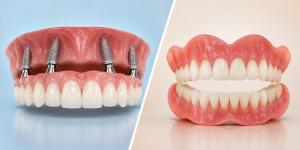
Both dental implants and traditional dentures can replace missing teeth, but they work differently.
Feature | Full Mouth Dental Implants | Traditional Dentures |
Support | Supported by implants in the jawbone | Rest on the gums |
Stability | Generally offer greater stability when properly planned | May move or become loose |
Removal | Fixed restorations are not removed by the patient; some implant-supported options are removable | Usually removed for cleaning |
Surgery | Requires a surgical procedure | Usually does not require implant surgery |
Bone support | Transfer chewing forces to the jawbone | Do not provide the same bone stimulation as natural tooth roots |
Cost | Usually involves a higher initial treatment cost | Often has a lower initial cost |
Maintenance | Requires regular cleaning and professional reviews | Requires daily cleaning and periodic adjustments |
Neither option is automatically better for every patient.
A person who cannot undergo implant surgery or prefers a non-surgical option may choose traditional dentures. Another person may prefer implant-supported teeth because of their stability.
The dentist should explain the benefits, limitations and costs of each option before recommending treatment.
How to Choose the Best Dentist in Mohali for Full Mouth Dental Implants?
Full-mouth dental implant treatment involves careful planning, surgery and long-term maintenance. Choosing a dentist based only on price or advertisements may not give you enough information to make the right decision.
If you are searching for the best dentist in Mohali for full-mouth dental implant treatment, consider these points:
1. Check the Dentist’s Qualifications
Look at the dentist’s educational qualifications, postgraduate training and experience in implant dentistry or oral and maxillofacial surgery.
2. Understand the Treatment Plan
The dentist should explain why a particular implant approach is being recommended and whether other treatment options are available.
3. Ask About Bone Assessment
Ask how the jawbone will be evaluated and whether a CBCT scan or other diagnostic investigation is required in your case.
4. Understand the Implant System
Ask which implant system is being used and why it has been selected for your treatment.
5. Discuss the Complete Cost
Request a detailed estimate that includes surgery, implants, temporary teeth, final restoration and any additional procedures.
6. Ask About Recovery and Risks
A responsible dentist should explain the expected healing period, possible complications and post-operative care.
7. Check Follow-Up and Maintenance
Full-mouth implant treatment does not end when the final teeth are fitted. Regular professional monitoring is important for maintaining the implants and surrounding tissues.
If you are comparing options for the best dental implant in Mohali, focus on clinical qualifications, treatment planning, transparency and long-term care rather than choosing a clinic based only on the lowest advertised price.
Frequently Asked Questions About Full Mouth Dental Implants
1. How many implants are required for a full mouth?
The number depends on the treatment design and the patient’s oral condition. All-on-4 uses four implants to support a full arch, while All-on-6 uses six. Other rehabilitation plans may require a different number.
2. What is the full mouth dental implant cost in Mohali?
The full mouth dental implant cost varies depending on the number of implants, implant brand, restoration material, bone condition and additional procedures. A personalised estimate can be provided after a dental examination.
3. Can full mouth dental implants be completed in one day?
In selected cases, implants can be placed and temporary fixed teeth attached soon after surgery. However, this does not mean the entire treatment is completed in one day. The implants still need time to integrate with the jawbone before the final restoration.
4. Is All-on-4 better than All-on-6?
Neither approach is automatically better. The choice depends on available bone, implant stability, bite forces and the planned restoration. Your dentist will recommend the suitable approach after examination.
5. Are full mouth dental implants painful?
The surgery is generally performed under local anaesthesia, which numbs the treatment area. Some discomfort, swelling and tenderness may occur after surgery, but these symptoms usually improve during recovery.
6. How long do full mouth dental implants last?
Dental implants can last for many years, but their longevity is not guaranteed. Good oral hygiene, regular dental visits, healthy gums and proper maintenance are important. The prosthetic teeth may need repair or replacement over time, depending on wear and other factors.
7. Can I get full mouth dental implants if I have bone loss?
Selected patients with bone loss may still be suitable for implant treatment. Bone grafting, sinus lift procedures or other specialised approaches may be considered depending on the location and extent of bone loss.
8. Can senior citizens get full mouth dental implants?
Yes, older adults may be suitable candidates. Age alone is not a deciding factor. General health, bone condition, gum health and medical history must be evaluated.
9. Do I need to visit the dentist after getting full mouth dental implants?
Yes. Regular dental check-ups are important to monitor the implants, surrounding gums, bite and replacement teeth. Your dentist will recommend a suitable maintenance schedule.
10. Can I eat normally after getting full mouth dental implants?
You will generally need to follow a soft-food diet during the initial healing period. Once the final teeth are fitted and your dentist confirms that it is appropriate, you can gradually return to a wider range of foods.
Conclusion
Full mouth dental implants can help people with extensive tooth loss replace missing teeth with fixed or removable implant-supported restorations. Treatment options may include All-on-4, All-on-6, implant-supported bridges and specialised techniques for selected patients with limited bone availability.
The right treatment depends on several factors, including jawbone condition, gum health, medical history, bite forces and individual expectations. Cost, treatment duration and recovery also vary from patient to patient.
Before choosing treatment, understand the available options, ask about the complete cost, discuss possible risks and select a qualified dental professional who can guide you through the process.
