
Mini Dental Implants: A Small Solution with Big Benefits
Introduction
If you’re wearing dentures and tired of them slipping, or if you’ve lost teeth and want a less invasive alternative to standard implants, Mini Dental Implants (MDIs) might be the right solution for you and are one of the more specialised types of dental implants designed for denture stability and minimal invasiveness. As a revolutionary, minimally invasive option, MDIs rely on their size to provide stable support, often acting as anchors that secure dentures firmly and comfortably. For many patients — including those with reduced bone or who want a quicker, simpler procedure — MDIs deliver big benefits in a small package.
What Are Mini Dental Implants?
• Definition & Size: Mini Dental Implants are small-diameter implants, typically less than 3 mm in diameter — about half the width of traditional implants.
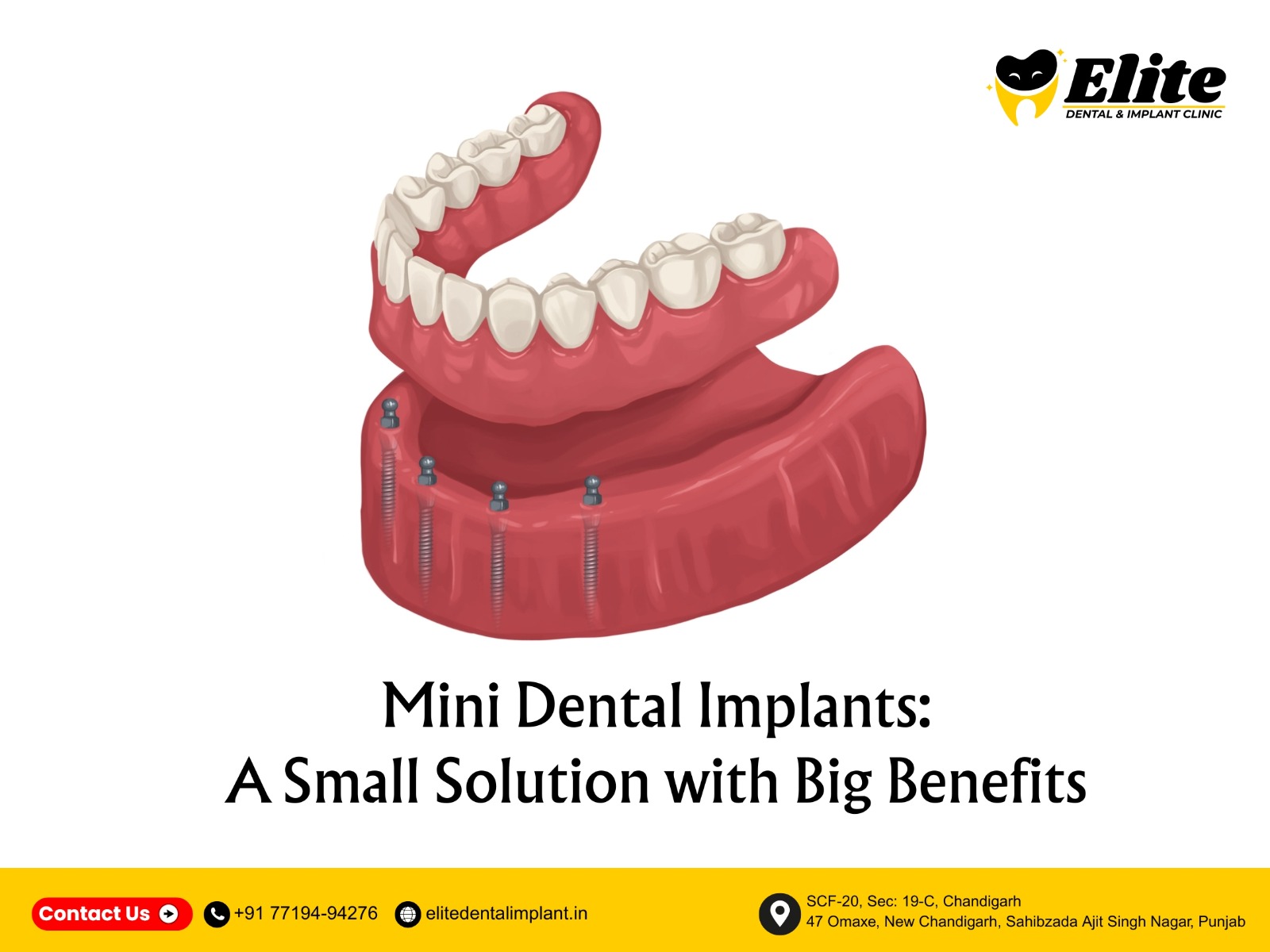
• Structure: They are usually a single, solid piece, unlike the two-part design (implant + abutment) of traditional implants. On top of this small post sits a ball-shaped head (or similar retention design) that serves to anchor a denture or overdenture.
• Primary Use Case: Their main role is to stabilise loose dentures — especially lower dentures — by acting as secure anchors. This improves retention and comfort dramatically compared to adhesive-based dentures.
Because of their compact size and simplified design, MDIs offer a gentler, less invasive route to dental restoration — particularly useful for denture wearers who seek more stability without undergoing full bone-intensive surgery.
Advantages of Mini Implants (Less Invasive, Quicker Healing)
Here are some of the core benefits of choosing Mini Dental Implants (MDIs):
• Less Invasive Procedure — The smaller diameter and simplified insertion technique often mean no large incisions or extensive bone work, which results in less trauma.
• Quicker Procedure & Faster Healing — Many patients receive MDIs and have their denture anchored in a single visit. Healing time tends to be shorter, and discomfort post-surgery is generally reduced.
• Lower Cost Compared to Standard Implants — Because MDIs require less material, simpler surgery, and often avoid bone grafts, they are usually more affordable.
• Immediate Load (Often Same-Day Denture Stabilization) — In many cases, dentures can be fitted or refitted immediately — meaning you leave the clinic with functional teeth the same day.
• Suitable for Patients with Limited Bone Volume — Because MDIs are narrow, they often can be placed even where bone width or density is limited — potentially avoiding bone grafting or more invasive procedures.
These advantages make MDIs especially attractive if you’re looking for denture stability, a speedy turnaround, and a gentler alternative to traditional implants.
Limitations and Ideal Candidates for Mini Implants
Limitations
• Less Suitable for Heavy Chewing / High Bite Forces — Because MDIs are narrower and have less surface area for bone contact, they are not ideal when you need to support large, fixed bridges or replace molars subject to heavy chewing forces.
• Potentially Less Long-Term Stability — While many studies show good short- to medium-term success, MDIs generally aren’t considered as robust as traditional implants for long-term full-mouth restorations.
• Not Ideal for All Cases — Cases involving very high occlusal load (e.g. bruxism), extensive bone loss, or need for large fixed prostheses may require standard implants instead.
Ideal Candidates for Mini Dental Implants
MDIs can be particularly beneficial for:
• Patients wearing lower dentures and seeking better stability and comfort.
• Patients who have limited bone width or density, and wish to avoid bone grafts or extensive surgery.
• Patients looking for a quicker, more affordable, and less invasive path to improved denture retention.
• People who prefer a “same-day solution” — where dentures can be stabilized immediately after implantation.
In short — MDIs are ideal when comfort, speed, cost-efficiency, and minimal surgical trauma are priorities, especially for denture wearers or patients with compromised bone.
Procedure Overview for Mini Implants
Here’s how the typical Mini Dental Implant procedure works:
• Local Anesthesia is used to numb the gums and jaw, ensuring comfort during the procedure.
• A small pilot hole is drilled for each implant — far smaller than what’s required for standard implants.
• The mini implant is inserted — a one-piece screw with a ball or retention head is placed into the jaw.
• In many cases, the existing denture is modified that same day with O-rings or retention caps so that it “snaps” onto the mini implants — giving you instant stability.
• Because the process is minimally invasive, there are often no sutures, and recovery is quick — many patients resume normal activities within 24–48 hours.
Thanks to this streamlined workflow, MDIs offer a convenient and comfortable path to stable dentures or provisional restorations — a big advantage over traditional implant protocols that may require months of healing before loading.
Conclusion
Mini Dental Implants (MDIs) offer a powerful, patient-friendly alternative to conventional implants — especially for denture wearers, patients with limited bone volume, or those seeking a quicker, simpler solution.
While they are not ideal for every situation — particularly for heavy chewing loads or large, fixed restorations — their advantages of minimal invasiveness, lower cost, faster turnaround, and immediate denture stabilization make them an excellent choice for many.
If you are considering dentures that are more secure, comfortable, and functional, Mini Dental Implants deserve serious consideration. A consultation with an experienced implant specialist as part of your overall dental implant treatment can help determine if MDIs are the right fit for you — and guide you toward a solution that restores your comfort, confidence, and smile.
