
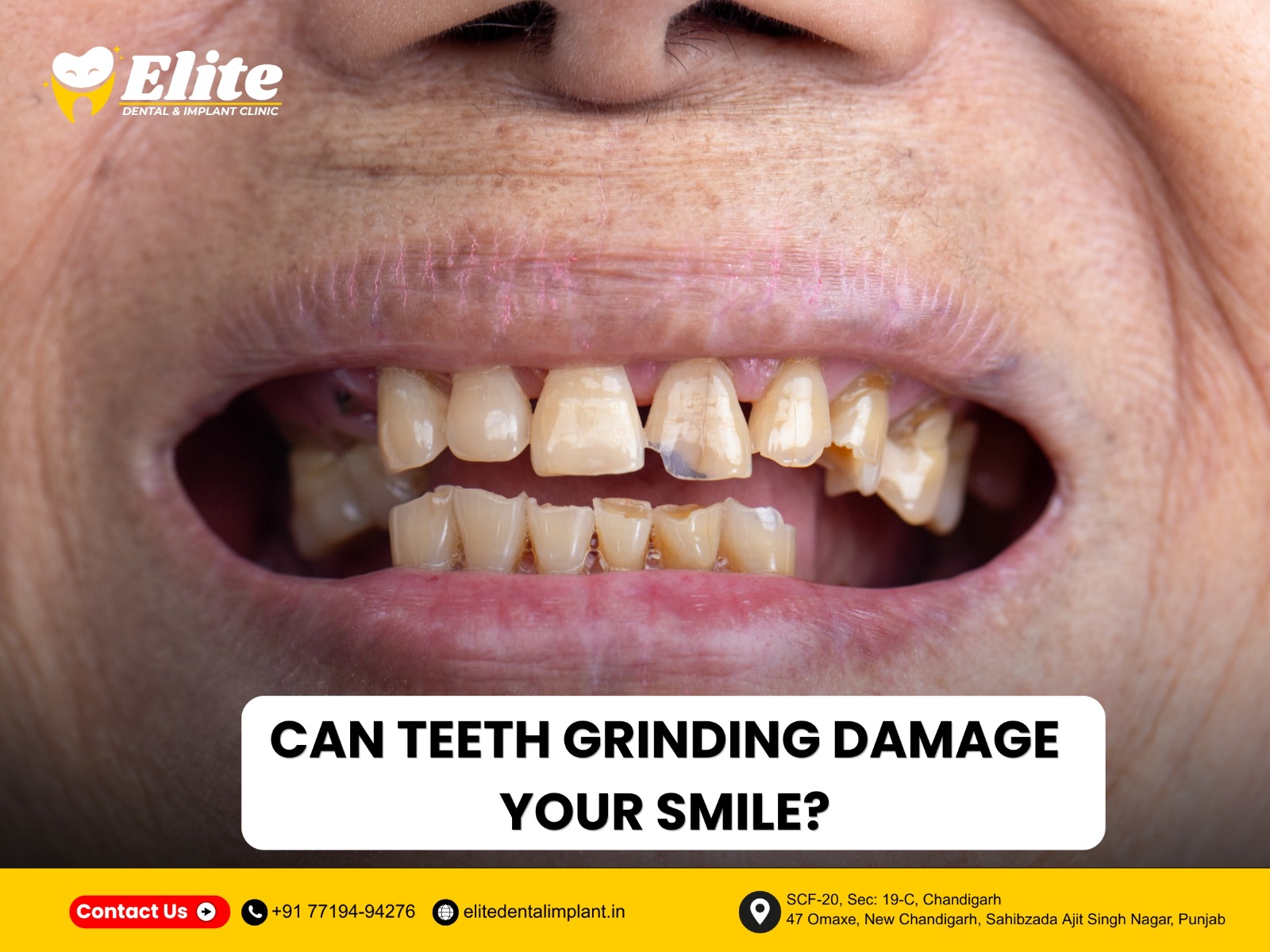
Can Teeth Grinding Damage Your Smile?
Yes — teeth grinding can seriously damage your teeth, gums, jaw, and overall oral health if left untreated.
Many people grind or clench their teeth without realizing it, especially during sleep. Over time, this constant pressure can wear down teeth, cause sensitivity, create jaw pain, and even damage dental work.
Teeth grinding is medically known as Bruxism.
Bruxism = Repetitive grinding or clenching of teeth, often unconsciously
Some people grind occasionally, while others experience severe long-term pressure on their teeth and jaw.
What Is Teeth Grinding and Why Does It Happen?
Teeth grinding happens when excessive pressure is repeatedly applied between upper and lower teeth.
Common Reasons Include:
- Stress and anxiety
- Sleep disturbances
- Bite misalignment
- Lifestyle habits
- Jaw muscle tension
In many cases, people are unaware they grind their teeth until symptoms begin appearing.
WHAT IS BRUXISM?
Bruxism is a condition where a person repeatedly clenches or grinds their teeth, consciously or unconsciously.
There are two major types:
1. Sleep Bruxism
Occurs during sleep and is often harder to notice.
2. Awake Bruxism
Usually linked to stress, concentration, or anxiety during the day.
What Causes Bruxism in Adults?
Bruxism usually develops due to multiple contributing factors.
Common Causes
Stress and Anxiety
One of the biggest triggers.
Poor Sleep Quality
Interrupted sleep patterns may increase grinding episodes.
Bite Problems
Improper alignment can place uneven pressure on teeth.
Lifestyle Habits
Excessive caffeine, alcohol, or smoking may contribute.
Emotional Tension
Many people clench teeth unconsciously during work stress or emotional pressure.
AND WHAT ARE THE SYMPTOMS?
Some symptoms appear gradually and are often ignored initially.
Common Symptoms of Teeth Grinding
✔ Jaw pain or tightness
✔ Morning headaches
✔ Tooth sensitivity
✔ Clicking jaw sounds
✔ Worn-down teeth
✔ Neck or facial pain
✔ Disturbed sleep
✔ Chipped or cracked teeth
Important Insight
Many people discover they grind their teeth only after a dentist notices visible wear patterns.
What Are the Warning Signs That You Grind Your Teeth?
Early Warning Signs
- Teeth feel sore in the morning
- Jaw feels tired after waking up
- Increased tooth sensitivity
- Flattened tooth surfaces
Advanced Signs
- Cracked teeth
- Gum recession
- Frequent headaches
- Jaw locking or clicking
Definition Block
Grinding damage usually develops slowly over time, not overnight.
HOW CAN TEETH GRINDING DAMAGE YOUR SMILE AND ORAL HEALTH?
Teeth grinding creates excessive force on teeth and surrounding structures.
1. Tooth Wear
Constant grinding slowly removes enamel.
This Can Lead To:
- Shorter teeth
- Flattened biting surfaces
- Sensitivity
- Increased cavity risk
Once enamel is lost, it cannot naturally grow back.
2. Cracked or Chipped Teeth
Grinding pressure may create:
- Tiny fractures
- Tooth cracks
- Broken fillings
Severe cases may require crowns or restorative treatment.
3. Gum Recession
Bruxism may increase stress on supporting gum tissues.
This can contribute to:
- Gum irritation
- Tooth root exposure
- Increased sensitivity
4. Jaw Joint Problems (TMJ Issues)
Grinding places pressure on jaw joints and muscles.
Symptoms May Include:
- Clicking sounds
- Jaw pain
- Difficulty opening the mouth
- Facial muscle fatigue
5. Damage to Dental Work
Teeth grinding may damage:
- Crowns
- Veneers
- Fillings
- Bridges
- Dentures
Patients searching for the best dental implant in Chandigarh are often advised to address bruxism because excessive grinding can also place harmful pressure on implant restorations.
Key Signs Your Smile Is Under Stress
Your Smile May Be Under Grinding Stress If:
✔ Teeth appear flatter
✔ Sensitivity is increasing
✔ Jaw pain happens frequently
✔ You wake up with headaches
✔ Teeth crack repeatedly
✔ Dental restorations keep breaking
Can Teeth Grinding Affect Dental Implants?
Yes. Although implants themselves are strong, excessive grinding pressure may affect:
- Implant crowns
- Bone support
- Implant longevity
Important Clinical Insight
Uncontrolled bruxism increases stress on both natural teeth and implants.
At Elite Dental & Implant Clinic, treatment planning for patients seeking the best dental implant in Chandigarh often includes evaluating bite pressure and grinding habits before implant procedures.
How Is Bruxism Diagnosed by a Dentist?
Dentists diagnose bruxism through:
- Clinical examination
- Bite analysis
- Tooth wear patterns
- Jaw muscle evaluation
- Patient symptoms
Common Signs Dentists Look For
- Flattened teeth
- Cracks
- Gum recession
- Jaw tenderness
- Tooth sensitivity
Sometimes sleep-related evaluation may also be advised.
What Are the Best Treatment Options for Teeth Grinding?
Treatment depends on the severity and underlying cause.
1. Night Guards
Definition Block
Night guards are custom dental appliances that protect teeth during sleep.
They help reduce:
- Tooth wear
- Jaw pressure
- Grinding damage
2. Stress Management
Because stress is a major trigger, relaxation methods may help:
- Better sleep habits
- Meditation
- Exercise
- Reduced caffeine intake
3. Bite Correction
If bite imbalance contributes to grinding, treatment may include:
- Orthodontics
- Dental reshaping
- Restorative correction
4. Repairing Damaged Teeth
Severely worn teeth may require:
- Crowns
- Veneers
- Restorative treatment
The goal is to restore both function and appearance.
What are some of the best ways to stop teeth from grinding & protect your smile from further damage?
Helpful Prevention Tips
✔ Wear a custom night guard
✔ Reduce stress levels
✔ Avoid chewing hard objects
✔ Limit caffeine before sleep
✔ Maintain proper sleep habits
✔ Schedule regular dental check-ups
Important Reminder
Ignoring grinding symptoms may lead to long-term dental damage that becomes more expensive and difficult to repair later.
Can Children Grind Their Teeth?
Yes. Children commonly grind their teeth during:
- Early tooth development
- Stress
- Sleep disturbances
In many children, mild grinding reduces naturally with age.
However, persistent grinding should still be evaluated professionally.
FAQs About Teeth Grinding
Is teeth grinding dangerous?
Occasional mild grinding may not cause serious harm. But chronic bruxism can damage teeth, gums, jaw joints, and dental restorations over time if untreated.
Why do people grind their teeth during sleep?
Sleep bruxism is often linked to stress, sleep disturbances, bite problems, or muscle tension. Many people are unaware they do it until symptoms appear.
Can stress alone cause teeth grinding?
Stress is one of the most common triggers. Emotional tension often causes unconscious clenching during both daytime and sleep.
Does teeth grinding go away on its own?
Sometimes mild cases improve naturally, especially in children. However, persistent or severe grinding usually requires professional management to prevent damage.
Can grinding damage dental implants?
Yes. Excessive grinding pressure can place stress on implant restorations and surrounding bone support if not managed properly.
Are over-the-counter night guards enough?
Generic guards may provide temporary protection, but custom night guards fit better, feel more comfortable, and offer more precise protection.
Can bruxism change the shape of my face?
Severe long-term grinding may enlarge jaw muscles and contribute to facial tightness or changes in jaw appearance in some individuals.
Why Early Diagnosis Matters
Teeth grinding often begins silently.
By the time symptoms become obvious, damage may already exist.
Patients looking for the best dentist in Chandigarh often benefit from early evaluation because identifying bruxism early can help protect:
- Teeth
- Jaw joints
- Dental restorations
- Long-term oral health
Final Thoughts
Teeth grinding is more than just a bad habit.
Over time, bruxism can:
- Wear down teeth
- Damage gums
- Cause jaw pain
- Affect dental restorations
- Impact smile aesthetics
The good news is that early diagnosis and proper treatment can help prevent serious long-term damage.
If you frequently wake up with jaw pain, headaches, or sensitive teeth, professional dental evaluation may help identify whether hidden grinding is affecting your smile.
