
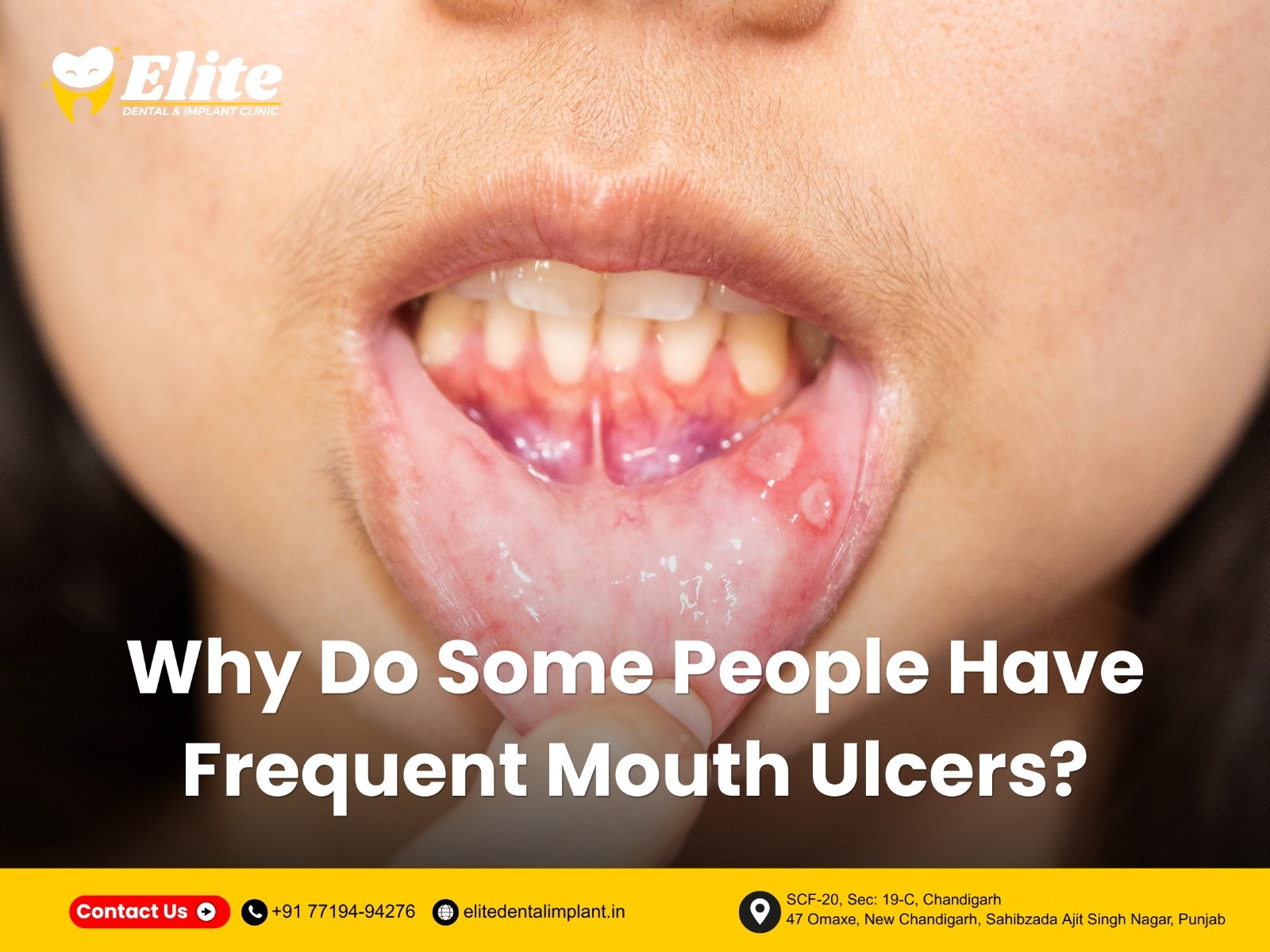
Why Do Some People Have Frequent Mouth Ulcers?
Mouth ulcers are small painful sores that form inside the mouth due to irritation, inflammation, or underlying health-related triggers.
For some people, ulcers appear occasionally and heal quickly. But for others, they keep returning every few weeks or months, making eating, speaking, and even smiling uncomfortable.
Frequent mouth ulcers are not always caused by “heat in the body” as many people believe. They can be linked to:
- Stress
- Vitamin deficiencies
- Poor oral hygiene
- Hormonal changes
- Weak immunity
- Dental irritation
- Digestive or medical conditions
Most ulcers heal naturally within 1–2 weeks, but recurring ulcers should never be ignored repeatedly.
They commonly appear on:
- Inner cheeks
- Tongue
- Lips
- Gums
- Floor of the mouth
Frequent ulcers usually mean that something is repeatedly irritating or affecting the oral tissues.
What Do Mouth Ulcers Usually Feel Like?
Many people notice:
- Burning sensation before the ulcer appears
- Pain while eating spicy or salty foods
- Discomfort while speaking
- Sensitivity while brushing
Most ulcers look:
- White, yellow, or gray in the center
- Surrounded by red inflammation
- Small and round or oval-shaped
They are usually not contagious.
Why Do Some People Get Mouth Ulcers Again and Again?
1. Nutritional Deficiencies
One of the most overlooked causes of recurrent ulcers is nutritional deficiency.
Common Deficiencies Linked to Mouth Ulcers
- Vitamin B12
- Iron
- Folate
- Zinc
Why This Happens
The inside lining of your mouth renews very quickly. When your body lacks essential nutrients, tissues become weaker and heal more slowly.
This makes the mouth more vulnerable to irritation and ulcer formation.
Important Insight
Sometimes recurring mouth ulcers are the first sign of an underlying nutritional imbalance.
2. Stress and Anxiety
Stress affects much more than mental health — it can also affect oral health.
Many people notice ulcers during:
- Exam periods
- Work pressure
- Emotional stress
- Lack of sleep
Definition Block
Stress can weaken immune regulation and increase inflammation inside the mouth.
This is why ulcers often appear during emotionally exhausting periods.
3. Accidental Injuries Inside the Mouth
Repeated irritation can damage the soft oral tissues.
Common Causes
- Accidentally biting your cheek
- Sharp tooth edges
- Aggressive brushing
- Braces irritation
- Poorly fitting dentures
Even small injuries can become painful ulcers if irritation continues repeatedly.
Can Dental Problems Cause Frequent Mouth Ulcers?
Yes — and many people do not realize this.
Dental Issues That May Trigger Ulcers
- Broken teeth
- Sharp fillings
- Rough crowns
- Ill-fitting dentures
- Orthodontic appliances
- Poor oral hygiene
Constant friction against soft tissues can repeatedly injure the mouth lining.
Patients often assume ulcers are only related to food or body heat, but local dental irritation is one of the most common causes.
4. Hormonal Changes
Hormonal fluctuations can affect tissue sensitivity and inflammation.
Some people experience ulcers during:
- Menstruation
- Pregnancy
- Hormonal imbalance
This is especially common in teenagers and young adults.
5. Weak or Overactive Immune Response
Sometimes the immune system mistakenly attacks healthy oral tissues.
Example:
Recurrent Aphthous Stomatitis (RAS)
Definition Block
RAS is a condition where painful mouth ulcers repeatedly occur without infection.
This is one of the most common causes of chronic recurring ulcers.
6. Certain Foods Can Trigger Mouth Ulcers
Some foods may irritate sensitive oral tissues.
Common Triggers
- Spicy foods
- Citrus fruits
- Pineapple
- Excessively salty foods
- Acidic drinks
Not everyone reacts the same way. Some people are naturally more sensitive than others.
7. Medical Conditions Linked to Frequent Mouth Ulcers
Recurring ulcers may sometimes indicate an underlying health condition.
Conditions Commonly Associated With Oral Ulcers
- Vitamin deficiency disorders
- Celiac disease
- Crohn’s disease
- Digestive disorders
- Autoimmune diseases
Important Clinical Point
Persistent or unusually frequent ulcers should always be professionally evaluated.
When Should You Be Concerned About Mouth Ulcers?
Occasional ulcers are common. But certain symptoms should not be ignored.
Consult a Dentist If:
- Ulcers last more than 2 weeks
- Ulcers return very frequently
- Pain affects eating or drinking
- Ulcers become unusually large
- You notice swelling or fever
- White or red patches do not heal
Definition Block
Not every oral ulcer is harmless. Some long-lasting ulcers require professional examination.
How Dentists Diagnose Frequent Mouth Ulcers
A proper dental evaluation may include:
- Oral examination
- Checking for sharp teeth or trauma
- Reviewing medical history
- Evaluating lifestyle and stress
- Assessing oral hygiene habits
In some cases, additional tests may be advised:
- Blood tests
- Nutritional screening
- Rarely, biopsy
Patients searching for the best dentist in Chandigarh often look for clinics that focus not only on treatment, but also on identifying the actual cause behind recurring oral problems.
How Are Frequent Mouth Ulcers Treated?
Treatment depends on the underlying cause.
For Trauma-Related Ulcers
- Smoothening sharp teeth
- Adjusting dentures
- Orthodontic corrections
For Nutritional Causes
- Vitamin supplements
- Dietary improvements
For Pain Relief
- Medicated gels
- Antiseptic mouth rinses
- Anti-inflammatory medication
For Chronic Cases
Further medical evaluation may be necessary.
Can Good Oral Hygiene Prevent Mouth Ulcers?
Good oral hygiene cannot prevent every ulcer, but it significantly reduces irritation and inflammation inside the mouth.
Helpful Habits
✔ Use a soft-bristle toothbrush
✔ Stay hydrated
✔ Maintain balanced nutrition
✔ Avoid excessive spicy foods
✔ Manage stress
✔ Schedule regular dental check-ups
Are Mouth Ulcers Related to Dental Implants?
Properly placed dental implants usually do not cause mouth ulcers.
However, irritation may occur due to:
- Poorly fitted temporary prosthetics
- Trauma during healing
- Inadequate oral hygiene
At Elite Dental & Implant Clinic, treatment planning focuses on long-term oral comfort and healthy tissue management — one reason many patients searching for the best dental implant in Chandigarh prioritize professional treatment planning and follow-up care.
Frequently Asked Questions (FAQs)
Are mouth ulcers dangerous?
Most mouth ulcers are harmless and heal naturally. However, ulcers that recur frequently, grow larger, or do not heal within two weeks should be examined professionally because sometimes they may indicate nutritional deficiencies, immune-related conditions, or other oral health issues.
Why do mouth ulcers hurt so much?
Mouth ulcers expose sensitive nerve endings beneath the oral tissue. This is why eating, drinking, speaking, or even brushing may feel painful — especially with spicy, salty, or acidic foods.
Can stress alone cause mouth ulcers?
Stress itself may not directly “create” ulcers, but it can weaken immune balance and increase inflammation inside the mouth. This makes some people more prone to developing ulcers during stressful periods.
Can children get frequent mouth ulcers?
Yes. Children can develop ulcers due to:
- Minor injuries
- Nutritional deficiencies
- Stress
- Braces irritation
- Viral infections
If ulcers occur repeatedly, proper dental evaluation is important.
Is vitamin deficiency a common reason for mouth ulcers?
Yes. Deficiencies in Vitamin B12, iron, folate, and zinc are among the most common causes of recurrent mouth ulcers. In many cases, correcting the deficiency significantly reduces recurrence.
Should I brush my teeth if I have a mouth ulcer?
Yes — but gently. Maintaining oral hygiene is important even during ulcers. Use a soft-bristle toothbrush and avoid aggressive brushing around the affected area.
Can toothpaste cause mouth ulcers?
Some people are sensitive to certain toothpaste ingredients, especially sodium lauryl sulfate (SLS), which may irritate oral tissues in susceptible individuals.
Can mouth ulcers be prevented completely?
Not always. But maintaining:
- Good oral hygiene
- Proper nutrition
- Stress management
- Regular dental check-ups
can significantly reduce how often they occur.
Final Thoughts
Frequent mouth ulcers are common, but recurring episodes should not always be ignored.
They may be linked to:
- Stress
- Nutritional deficiencies
- Oral trauma
- Hormonal changes
- Immune reactions
- Underlying medical conditions
Early diagnosis helps identify the real cause and prevents long-term discomfort.
If ulcers are happening repeatedly or taking too long to heal, professional dental evaluation can help you find the root cause and receive the right treatment before the problem worsens.
