
Immediate Loading Dental Implants: Clinical Protocol, Benefits, Risks and Recovery
Losing multiple teeth can affect more than your smile. It can make chewing difficult, change the way you speak and reduce confidence in everyday interactions. Dental implants offer a way to replace missing teeth by supporting artificial teeth through implants placed in the jawbone.
Traditionally, patients have had to wait for a healing period before receiving their final implant-supported teeth. However, with immediate loading dental implants, a temporary or provisional restoration may be attached shortly after implant placement, sometimes on the same day.
This approach can reduce the time a patient spends without teeth. However, immediate loading is not suitable for every patient. It requires careful diagnosis, adequate primary implant stability, appropriate bone conditions and precise surgical and prosthetic planning.
At Elite Dental & Implant Clinic, Dr. Gourav Ahuja focuses on implant treatment planning and advanced implant procedures. This guide explains how immediate loading works, what clinicians evaluate before choosing it, the clinical steps involved and what patients should know before considering a dental implant in Mohali.
1. What Are Immediate Loading Dental Implants?
Immediate loading is an implant treatment approach in which a provisional or definitive prosthesis is connected to a newly placed dental implant within a short period after surgery.
Instead of waiting several months before receiving an implant-supported restoration, selected patients may receive temporary teeth shortly after implant placement.
The important point is that receiving temporary teeth quickly does not mean the implant has completed healing. The implant still needs time to integrate with the surrounding bone through a biological process called osseointegration.
Immediate Loading, Immediate Placement and Immediate Restoration: What Is the Difference?
These terms are related but describe different stages of implant treatment.
- Immediate implant placement: The implant is inserted into the extraction socket immediately after a tooth is removed.
- Immediate restoration: A provisional tooth or prosthesis is connected shortly after implant placement, generally without direct contact with the opposing teeth.
- Immediate loading: The implant-supported prosthesis is placed into functional occlusal contact with the opposing dentition within the defined immediate-loading period.
These terms should not be used interchangeably. An implant can be placed immediately after extraction without being loaded immediately.
How Is Immediate Loading Classified?
Dr. Ahuja’s presentation discusses different loading timelines. It includes immediate, early and conventional loading protocols. It also distinguishes between functional and non-functional prostheses.
Protocol | Timing described in the presentation |
Immediate loading | Within one week in the classification on page 4 |
Early loading | Between one week and two months in the classification on page 4 |
Conventional loading | After two months in the classification on page 4 |
The presentation also gives a second classification on page 5: immediate occlusal loading within two weeks, early occlusal loading between two weeks and three months, and delayed or staged loading after three months.
Clinical note: These timelines differ within the presentation. The exact definition and terminology should be confirmed by Dr. Ahuja before publication. The treating clinician must also decide the appropriate loading schedule for each case.
2. How Do Dental Implants Heal After Placement?
To understand immediate loading, it is important to understand how an implant becomes stable inside the jawbone.
Dental implants rely on a biological process known as osseointegration. During this process, bone forms and remodels around the implant surface, creating a stable connection.
Two types of stability are important.
Primary Stability
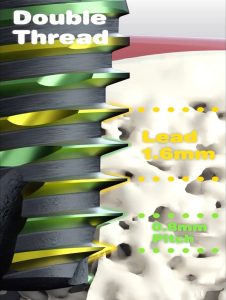
Primary stability is the mechanical stability achieved when the implant is initially inserted into the bone. Primary stability is particularly important when considering immediate loading.
It depends on several factors, including:
1. Bone quality and quantity
2. Implant dimensions and design
3. Surgical drilling protocol
4. Implant positioning
5. The amount of mechanical engagement with the surrounding bone
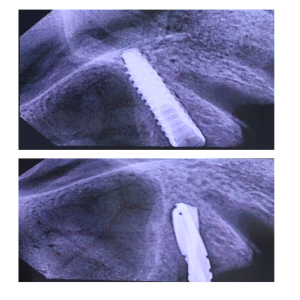
Secondary Stability or Osseointegration
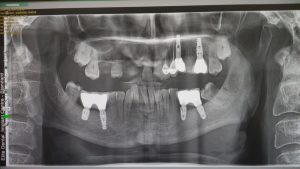
Secondary stability develops through biological healing and bone integration around the implant.
As healing progresses, the biological connection becomes increasingly important for maintaining implant stability.
Understanding the Stability Dip
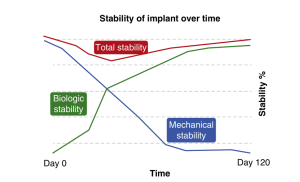
Implant stability does not necessarily increase continuously after placement.
During the early healing period, mechanical stability can decrease as bone remodels around the implant. Biological stability gradually develops during this time.
This temporary reduction is commonly referred to as the stability dip.
If excessive forces or movement affect the implant during this vulnerable period, the healing process may be compromised. This is one reason why implant loading decisions must be based on clinical findings rather than treatment speed alone.
3. Immediate Loading vs Early Loading vs Conventional Loading
The main difference between these approaches is when the implant-supported restoration is connected and placed under functional load.
Feature | Immediate loading | Early loading | Conventional loading |
Restoration timing | Shortly after implant placement | After an initial healing period | After a longer healing period |
Temporary teeth | May be provided shortly after surgery | May be provided during early healing | Usually after the planned healing period |
Primary stability | Particularly important | Important | Still necessary |
Treatment planning | Requires careful surgical and prosthetic coordination | Requires case-specific planning | Follows a staged approach |
Patient suitability | Selected cases | Selected cases | Used when a delayed approach is preferred |
There is no single loading protocol that is best for every patient. The decision depends on the clinical condition, implant stability, bone characteristics, prosthetic requirements and the patient’s ability to follow post-operative instructions.
4. What Are the Types of Immediate Loading Procedures?
Immediate loading can be considered for different types of tooth replacement, depending on the number and location of missing teeth and the clinical conditions.
Single-Tooth Immediate Loading
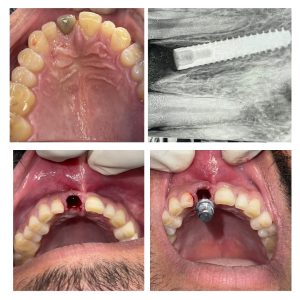
This approach may be considered when replacing an individual missing tooth.
The implant must have suitable primary stability, and the temporary crown must be designed to manage occlusal forces appropriately.
In some cases, a provisional crown is kept out of direct contact with the opposing teeth during healing. This is different from functional immediate occlusal loading.
Multiple-Tooth Immediate Loading
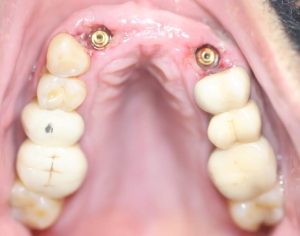
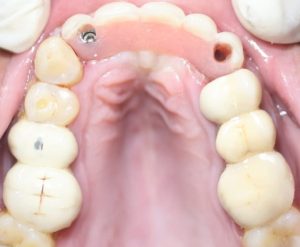
When several teeth are missing, multiple implants may support a provisional restoration.
The implant positions, distribution and prosthetic design must be planned together. The clinician must also consider the forces acting on the restoration.
Full-Arch Immediate Loading
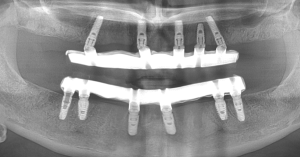
Full-arch immediate loading involves placing multiple implants to support a complete provisional fixed restoration.
The presentation highlights several important considerations:
- Adequate anteroposterior implant spread
- Appropriate implant number and distribution
- A rigid prosthetic framework
- Passive fit of the restoration
- Controlled cantilever design
- Appropriate prosthetic thickness
A full-arch restoration connects the implants through a common prosthesis, helping distribute functional forces across the implant-supported structure.
Immediate Loading After Tooth Extraction
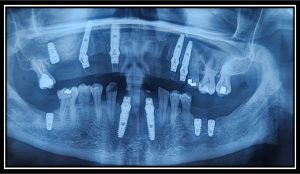
In selected cases, an implant may be placed immediately after a tooth is extracted, followed by immediate or early restoration.
However, immediate implant placement and immediate loading are separate decisions. The extraction site must be assessed for bone conditions, infection, available implant anchorage and prosthetic requirements.
Dr. Ahuja’s presentation includes a surgical sequence involving extraction, socket cleaning, implant positioning, bone grafting where required and immediate prosthetic planning.
5. Who Is a Suitable Candidate for Immediate Loading?
Not every patient who needs dental implants is suitable for immediate loading.
Before recommending this approach, the clinician must evaluate the patient’s oral health, bone conditions, implant stability, implant positioning and prosthetic requirements. Successful immediate loading depends on achieving adequate primary stability while controlling the functional forces acting on the implants.
The following clinical and prosthetic prerequisites should be considered:
1. Adequate Bone Quality and Density
Bone quality plays an important role in achieving primary stability at the time of implant placement.
The presentation discusses different bone density classifications, including D1, D2 and D3, as part of immediate-loading planning. Bone characteristics must be evaluated before selecting the implant and loading protocol.
2. Sufficient Bone Dimensions
The jawbone must provide adequate height and width to accommodate the planned implant dimensions and position.
CBCT imaging can help assess bone volume, anatomical structures and the available space for implant placement.
3. Adequate Primary Stability and Insertion Torque
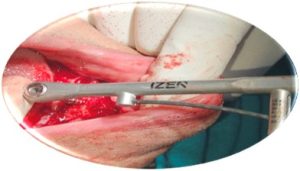
The implant must achieve sufficient primary mechanical stability at the time of placement.
Insertion torque should be progressively increased during placement, while avoiding excessive force. Dr. Ahuja’s presentation discusses approximately 30–40 Ncm or higher as commonly selected thresholds for immediate loading.
However, this should not be considered a universal requirement. The appropriate torque depends on bone conditions, implant design and the clinical situation.
4. Ideal Resonance Frequency Analysis (RFA) Reading
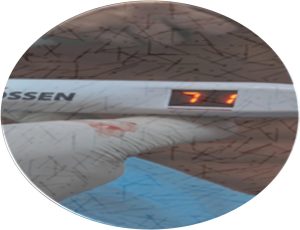
Resonance Frequency Analysis (RFA) helps evaluate implant stability through Implant Stability Quotient (ISQ) readings.
An appropriate ISQ reading supports clinical decision-making when considering immediate loading. It should be interpreted alongside insertion torque, bone quality and other clinical findings rather than used as an isolated criterion.
5. Appropriate Implant Number and Size
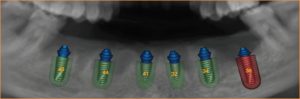
The number, dimensions and distribution of implants must be planned according to the prosthetic requirements and available bone support.
Implant length and diameter should be selected based on the anatomical conditions, required support and planned restoration.
6. Adequate Anteroposterior Spread
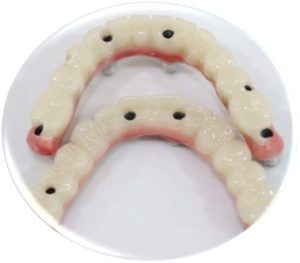
In full-arch rehabilitation, implants should be distributed to achieve adequate anteroposterior spread.
This helps improve prosthetic support and force distribution while minimising or avoiding excessive cantilevers.
7. Controlled Functional Loading
The direction and magnitude of forces acting on implants must be carefully considered.
Implant position, prosthetic design and occlusal contacts should be planned to minimise unfavourable loading conditions. Reduced lateral forces and controlled loading directions can help protect the implants during the healing phase.
8. Absolute Passivity of the Prosthesis
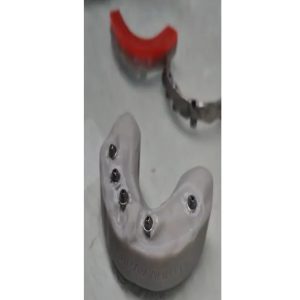
The provisional prosthesis must achieve a passive fit over the implants.
Absolute passivity is important to minimise unwanted stresses caused by misfit and to support an appropriate distribution of forces across the implants.
9. Rigid Framework
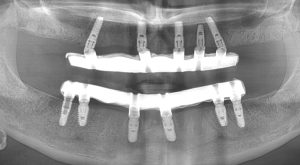
A rigid prosthetic framework helps stabilise the connected implants and distribute functional forces across the restoration.
Framework rigidity is particularly important in full-arch immediate-loading protocols.
10. Proper Occlusion and Bite Management
Occlusion must be carefully evaluated and adjusted to avoid excessive or unfavourable forces on the implants.
The bite, loading direction and prosthetic contacts should be planned according to the implant positions and the patient’s functional requirements.
11. Ability to Follow Post-Operative Instructions
Patient compliance is essential for successful healing.
Patients must be willing to follow recommended dietary restrictions, maintain proper oral hygiene and attend scheduled follow-up appointments.
Smoking, uncontrolled diabetes, poor oral hygiene and other medical or behavioural factors may affect healing and must be evaluated before treatment.
Clinical Consideration: Immediate loading is a case-dependent treatment approach. No single insertion torque value, ISQ reading or implant configuration guarantees suitability. The final decision must be based on a comprehensive clinical and prosthetic assessment.
6. When May Immediate Loading Not Be Recommended?
Immediate loading may not be appropriate when the clinical conditions do not support predictable implant stability and prosthetic function.
Factors that may lead a clinician to choose a delayed approach include:
- Inadequate primary stability
- Insufficient bone support
- Significant bone defects requiring additional treatment
- Uncontrolled periodontal disease
- Poor oral hygiene
- Uncontrolled systemic conditions
- Heavy or uncontrolled biting forces
- Bruxism or clenching that may overload the restoration
- Difficulty following post-operative instructions
These factors are not all automatic exclusions. Their significance depends on the individual case and the treatment plan.
The safer decision is to choose a loading protocol that supports implant healing rather than prioritising the speed of receiving teeth.
7. How Is Immediate Loading Planned Before Surgery?
Successful immediate loading begins before the implant is placed.
The surgical and prosthetic stages must be planned together because the final position of the teeth influences where the implants should be placed.
Medical History and Clinical Examination
The clinician reviews the patient’s medical history, medication use, smoking habits, diabetes status and previous dental treatment.
The gums, remaining teeth, bite relationship and oral hygiene are also assessed.
CBCT Scan and Bone Evaluation
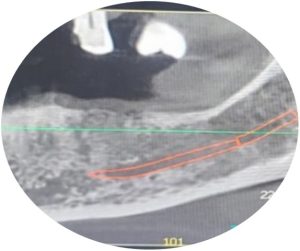
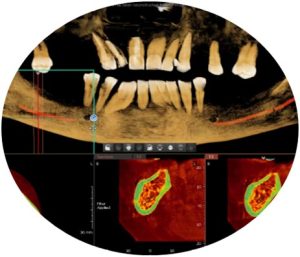
Cone Beam Computed Tomography (CBCT) provides three-dimensional information about the jawbone.
It can help the clinician evaluate:
- Bone height and width
- Bone quality and anatomical limitations
- The location of the inferior alveolar nerve
- The position of the maxillary sinus
- Potential implant positions
- Whether bone grafting or other procedures may be required
The presentation includes several pre-operative CBCT examples and measurements used to assess bone dimensions and anatomical structures.
CBCT is selected when clinically indicated; it is not necessarily required in every implant case.
Implant Position and Dimension Planning
The clinician determines the number, length, diameter and position of implants.
The implant design and thread configuration are also considered.
The objective is to achieve an appropriate balance between biological support, primary stability and the planned prosthetic restoration.
Prosthetic Planning
The provisional restoration should be planned before surgery.
This includes considering:
- The intended tooth position
- The available prosthetic space
- The abutment system
- The restoration’s thickness and rigidity
- Occlusal contacts
- Anteroposterior implant spread
- The possibility of cantilevers
This planning helps coordinate the surgical and restorative stages.
8. Immediate Loading Implant Protocol: Step-by-Step Clinical Approach
Dr. Ahuja’s presentation outlines a protocol for predictable immediate loading on page 40 and illustrates surgical and prosthetic stages across pages 44–55 and 79–93.
The following section explains the sequence in patient-friendly language while retaining the clinical concepts.
Step 1: Medical and Clinical Assessment
The process begins with a detailed review of medical history and oral health.
Factors such as smoking, diabetes, periodontal health and bone conditions are evaluated.
Step 2: CBCT-Based Treatment Planning
CBCT images are assessed to understand bone quality, quantity and anatomical limitations.
The clinician determines the number, dimensions and positions of implants and considers whether grafting may be required.
Step 3: Surgical Access and Bone Preparation
Depending on the case, a full-thickness flap may be raised to expose the underlying bone.
Dr. Ahuja’s presentation also discusses crestotomy as part of creating the required prosthetic space and establishing an appropriate implant platform.
Step 4: Implant Site Preparation
The osteotomy is prepared according to bone quality, implant design and the planned loading protocol.
The drilling sequence must be selected carefully because bone preparation influences primary stability.
Step 5: Implant Placement and Primary Stability Evaluation
The implants are placed in the planned positions.
Insertion torque and resonance frequency analysis may be used to assess primary stability.
The presentation discusses progressively increasing torque values during placement and highlights ISQ readings in its clinical examples.
One case illustrates ISQ readings of 82 and 76, while another surgical example highlights an ISQ above 80. These are case-specific observations, not universal targets for every implant.
Step 6: Placement of Multi-Unit Abutments
In suitable full-arch cases, multi-unit abutments (MUAs) may be placed during surgery.
These components provide a prosthetic connection between the implants and the fixed restoration.
The presentation repeatedly illustrates MUA placement at the time of surgery.
Step 7: Bone Grafting Where Required
When the clinical situation requires it, bone grafting may be considered.
The presentation includes examples of autogenous bone and xenograft materials.
The need for grafting depends on the bone defect, implant position and treatment objectives. Grafting does not automatically mean immediate loading is possible.
Step 8: Impression or Digital Scanning
Once the implant positions and prosthetic components are ready, the clinician records the implant positions.
Dr. Ahuja’s presentation demonstrates digital scanning and same-day impression procedures.
Accurate recording is important for manufacturing a restoration that fits the implant-supported framework.
Step 9: Achieving Passive Fit
The provisional restoration must fit the implant-supported components accurately.
The presentation emphasises absolute passivity and demonstrates the one-screw test.
A passive fit helps avoid introducing unwanted strain into the implant-prosthesis connection.
Step 10: Provisional Prosthesis Placement
A temporary restoration may be connected to the implants when the clinical conditions permit immediate loading.
The presentation illustrates temporary PMMA prostheses and restorations placed over multi-unit abutments.
The provisional restoration must have appropriate thickness, rigidity and fit.
Step 11: Occlusal Evaluation
The clinician evaluates the bite and manages occlusal contacts according to the selected loading protocol.
In full-arch treatment, the implant distribution and cantilever design are particularly important.
Step 12: Post-Operative Evaluation and Follow-Up
The patient is monitored through clinical reviews and appropriate imaging.
The clinician evaluates soft tissue healing, prosthesis stability and the implant-supported restoration.
The definitive restoration is planned after the appropriate healing and assessment period.
9. Why Are Primary Stability and ISQ Important?
Primary stability is one of the most important factors when deciding whether an implant can be loaded immediately.
Two commonly discussed methods of evaluating stability are insertion torque and resonance frequency analysis.
Insertion Torque
Insertion torque measures the rotational force required to place the implant into the prepared bone.
Dr. Ahuja’s presentation notes that values of approximately 30–40 Ncm and higher have commonly been used as thresholds in immediate-loading protocols.
However, insertion torque alone should not determine whether an implant is suitable for immediate loading.
Implant Stability Quotient (ISQ)
ISQ is a measurement obtained through resonance frequency analysis.
It provides information about implant stability and can be recorded at different stages of treatment.
The presentation includes clinical examples with ISQ readings of 82 and 76 and another example with an ISQ above 80.
Torque and ISQ measure stability differently. They should be interpreted together with the clinical findings rather than treated as interchangeable measurements.
10. Why Is the Provisional Prosthesis Important?
The provisional restoration is not simply a temporary replacement for missing teeth. It is an important part of the immediate-loading protocol.
It must support the planned tooth arrangement while avoiding excessive stress on the implants during healing.
Adequate Prosthetic Thickness
The presentation highlights adequate thickness as an important requirement for temporary prostheses.
A restoration must have sufficient structural strength for its intended use.
Rigid Framework
A rigid framework helps connect the implants and distribute functional forces across the prosthesis.
Absolute Passive Fit
The restoration should fit the implant-supported components accurately without introducing unwanted strain.
Cantilever Management
The presentation emphasises achieving adequate anteroposterior spread and avoiding unnecessary cantilevers.
Cantilevers can increase the mechanical demands placed on the implant-supported restoration.
Temporary PMMA Prosthesis
The presentation includes examples of temporary PMMA restorations.
These provisional prostheses can be used during the healing period, subject to the clinician’s treatment plan.
A temporary restoration is not automatically the final prosthesis. The definitive restoration may be provided after the required healing and clinical evaluation.
11. What Is the Role of CBCT in Immediate Loading?
CBCT imaging can provide detailed information about the jawbone and surrounding anatomy.
For immediate-loading cases, this information may support decisions about implant position, dimensions and surgical approach.
The presentation includes pre-operative and post-operative CBCT images showing implant positions and bone measurements.
In certain cases, CBCT assessment may also help the clinician evaluate anatomical structures such as the inferior alveolar canal and maxillary sinus.
The purpose is to support informed treatment planning and reduce avoidable anatomical risks.
12. Immediate Loading in Full-Mouth Dental Implants
Full-mouth rehabilitation may be considered when a patient has lost most or all teeth, or when the remaining teeth cannot be predictably maintained.
In selected cases, multiple implants can support a fixed provisional restoration shortly after surgery.
Implant Number and Distribution
The number and distribution of implants are planned according to the available bone, prosthetic design and expected functional forces.
Anteroposterior Spread
Adequate anteroposterior spread helps create a favourable support arrangement for the restoration.
Cross-Arch Stabilisation
In full-arch treatment, a rigid provisional prosthesis can connect multiple implants and help distribute functional forces.
Multi-Unit Abutments
Multi-unit abutments provide a common prosthetic connection for the full-arch restoration.
Temporary Fixed Teeth
A provisional restoration may be connected after surgery when the stability and prosthetic conditions support immediate loading.
The patient must still follow the clinician’s dietary and maintenance instructions during healing.
13. What Are the Benefits of Immediate Loading Dental Implants?
Immediate loading may offer several practical advantages for appropriately selected patients.
Reduced Waiting for a Fixed Provisional Restoration
Patients may receive temporary implant-supported teeth shortly after surgery rather than waiting through the entire initial healing period without a fixed provisional restoration.
Earlier Improvement in Appearance
For patients replacing visible front teeth or undergoing full-mouth rehabilitation, a provisional restoration may help restore the appearance of their smile earlier.
Fewer Separate Treatment Stages
Depending on the case, surgical and provisional restorative procedures may be coordinated within a shorter treatment schedule.
Patient Convenience
Immediate provisionalisation may be particularly helpful for patients who travel long distances or have difficulty attending multiple appointments.
Earlier Functional Rehabilitation
A properly planned provisional restoration may help patients regain some oral function earlier. However, the clinician may restrict chewing forces during the healing period.
These benefits depend on patient selection and successful clinical execution. Immediate loading does not guarantee faster complete healing or better long-term outcomes in every case.
14. What Are the Risks and Disadvantages?
Immediate loading requires careful coordination between surgery and prosthetic treatment.
Dr. Ahuja’s presentation identifies increased skill requirements, longer initial surgical and prosthetic appointments and possible increased implant mobility as disadvantages.
Other potential complications include:
- Failure of osseointegration
- Excessive implant movement during healing
- Prosthetic fracture
- Screw loosening
- Excessive occlusal loading
- Soft tissue complications
- Inflammation around implants
- Need for additional treatment or restoration repair
A provisional restoration that does not fit correctly or receives excessive functional forces can compromise the treatment.
This is why immediate loading should only be performed when the clinical conditions support it.
15. What Is Recovery Like After Immediate Loading?
Receiving temporary teeth shortly after implant surgery does not mean that the jawbone has completed healing.
The implant continues to undergo biological integration after the provisional restoration has been placed.
Patients should follow the treating clinician’s instructions throughout this period.
Diet After Surgery
Patients may be advised to follow a soft-food diet and avoid hard, crunchy or sticky foods.
The exact restrictions depend on the number of implants, the restoration design and the surgical procedure.
Oral Hygiene
Maintaining oral hygiene is essential.
Patients should follow the clinician’s instructions for cleaning the surgical area and provisional restoration.
Smoking and Tobacco
Smoking and tobacco use can adversely affect oral healing and implant treatment outcomes.
Patients should discuss their habits with the treating clinician and follow advice on stopping or avoiding tobacco during healing.
Follow-Up Appointments
Regular follow-up visits allow the clinician to assess healing, implant stability, soft tissue condition and the provisional prosthesis.
Warning Signs
Patients should contact their dentist if they experience increasing pain, swelling, bleeding, pus discharge, an unusual bite change or movement of the implant-supported restoration.
A loose temporary restoration and a mobile implant are not the same problem, so clinical assessment is important.
16. Immediate Loading vs Conventional Dental Implants: Which Is Better?
Neither approach is universally better.
Immediate loading may be suitable when the implant achieves adequate primary stability and the surgical and prosthetic conditions support early restoration.
Conventional loading may be more appropriate when the clinician wants to allow a longer healing period before connecting the prosthesis.
The decision should be based on the patient’s clinical condition rather than a preference for receiving teeth quickly.
For someone considering a dental implant in Mohali, the first step should be a detailed clinical examination and treatment plan.
17. What Factors Affect the Success of Immediate Loading?
The outcome of immediate-loading treatment depends on several interconnected factors.
Patient-related factors: Medical history, smoking, oral hygiene, periodontal health and compliance with instructions.
Bone-related factors: Bone quality, quantity, dimensions and anatomical limitations.
Implant-related factors: Implant design, dimensions, position and primary stability.
Surgical factors: Osteotomy preparation, implant positioning and the clinician’s surgical approach.
Prosthetic factors: Passive fit, framework rigidity, restoration thickness, occlusal management and cantilever design.
Maintenance factors: Follow-up, hygiene and timely management of complications.
A successful treatment plan must consider all these factors rather than relying on one measurement or technique.
18. Common Myths About Immediate Loading Dental Implants
Myth 1: Same-Day Teeth Mean the Implant Has Fully Healed
Fact: The provisional teeth may be placed quickly, but osseointegration continues over the following healing period.
Myth 2: Everyone Can Receive Immediate Loading Implants
Fact: Immediate loading requires suitable bone conditions, primary stability and appropriate prosthetic planning.
Myth 3: Patients Can Eat Anything After Getting Same-Day Teeth
Fact: Dietary restrictions may still be necessary to protect the healing implants and provisional restoration.
Myth 4: Immediate Loading and Immediate Implant Placement Are the Same
Fact: Immediate placement refers to inserting an implant after extraction. Immediate loading refers to connecting a prosthesis and placing it under functional load within the defined period.
Myth 5: Temporary Teeth Are Always the Final Teeth
Fact: A provisional restoration may be used during healing. A definitive restoration may be planned later.
19. What Determines the Cost of Immediate Loading Dental Implants?
The cost of immediate loading depends on the complexity of the treatment and the materials and procedures required.
Factors that may influence the overall cost include:
- Number of implants required
- Implant system and components
- Type of provisional restoration
- Final prosthetic material
- CBCT imaging and diagnostic procedures
- Digital planning and surgical guides, where used
- Bone grafting or additional procedures
- Laboratory and prosthetic work
- Follow-up and maintenance requirements
A single-tooth restoration and a full-mouth implant rehabilitation involve very different treatment requirements.
For an accurate estimate, the patient needs a clinical examination and an individualised treatment plan. The cost should not be determined from the term “same-day implants” alone.
20. Immediate Loading Dental Implants at Elite Dental & Implant Clinic, Mohali
Choosing an implant treatment approach requires more than selecting a procedure based on how quickly teeth can be provided.
At Elite Dental & Implant Clinic, treatment planning considers the patient’s oral health, bone conditions, implant position and prosthetic requirements.
Dr. Gourav Ahuja holds a BDS and MDS and has a Fellowship in Oral Implantology. His clinical interests include advanced implant procedures, including pterygoid and zygomatic implants.
The clinic’s implant treatment planning includes the use of CBCT imaging where clinically indicated to assess bone dimensions and anatomical structures.
Patients considering immediate loading can discuss their treatment requirements, available options and expected healing process during a consultation.
Frequently Asked Questions About Immediate Loading Dental Implants
1. What are immediate loading dental implants?
Immediate loading dental implants are implants that receive an implant-supported provisional or definitive restoration within a short period after placement, according to the selected loading protocol.
2. Can I get teeth on the same day as implant surgery?
Some patients may receive temporary teeth on the day of implant surgery. This depends on primary stability, bone conditions, implant positioning and the prosthetic treatment plan.
3. Is immediate loading the same as same-day dental implants?
The terms are often used together, but same-day treatment is not suitable for every immediate-loading case. The timing and type of restoration depend on the clinical protocol.
4. How long does osseointegration take?
Osseointegration develops over time and varies between patients and treatment sites. Immediate loading does not eliminate the biological healing period.
5. What primary stability is required for immediate loading?
The clinician evaluates primary stability using clinical findings and measurements such as insertion torque and resonance frequency analysis. There is no single measurement that should be applied universally to every case.
6. What is an ISQ reading?
ISQ stands for Implant Stability Quotient. It is obtained through resonance frequency analysis and provides information about implant stability.
7. Can immediate loading be done after tooth extraction?
It may be considered in selected cases. The extraction site, bone support, implant stability and prosthetic requirements must be evaluated before treatment.
8. Can patients with low bone density receive immediate loading?
Low bone density may make primary stability more difficult to achieve. The clinician must assess the available bone and determine whether immediate loading is appropriate.
9. Can smokers receive immediate loading implants?
Smoking is a risk factor that may affect implant healing and treatment outcomes. The clinician should evaluate the patient’s smoking history and discuss risk reduction before treatment.
10. Can diabetic patients receive immediate loading implants?
Diabetes does not automatically exclude a patient from implant treatment. However, blood sugar control, medical history and healing-related risks must be assessed before deciding on the loading protocol.
11. Are immediate loading implants used for full-mouth rehabilitation?
Yes, immediate loading may be considered for selected full-arch cases where the implants achieve appropriate stability and the provisional restoration can be designed and fitted correctly.
12. Are temporary teeth permanent?
No. Temporary teeth are provisional restorations used during the healing period. A definitive restoration may be provided after the clinician evaluates healing and implant integration.
13. Can I chew normally after immediate loading?
Not necessarily. Patients may need to follow dietary restrictions and avoid excessive forces on the provisional restoration during healing.
14. What happens if an implant becomes mobile?
Implant mobility requires prompt clinical evaluation. It may indicate a problem with implant stability or healing, but the cause must be determined through examination.
15. How much do immediate loading dental implants cost in Mohali?
The cost depends on the number of implants, implant system, provisional and final restorations, imaging, bone grafting and other treatment requirements. An individual estimate requires clinical assessment.
Conclusion
Immediate loading dental implants can provide selected patients with an earlier provisional restoration after implant surgery. However, the procedure depends on careful diagnosis, adequate primary stability, appropriate implant positioning and a well-designed prosthesis.
The most important consideration is not simply how quickly teeth can be provided, but whether the patient’s clinical conditions support the chosen loading protocol.
If you are considering a dental implant in Mohali, consult an experienced implant clinician to understand your options, treatment requirements and expected healing process.
